

How to Find the Right Web Design and Development Company
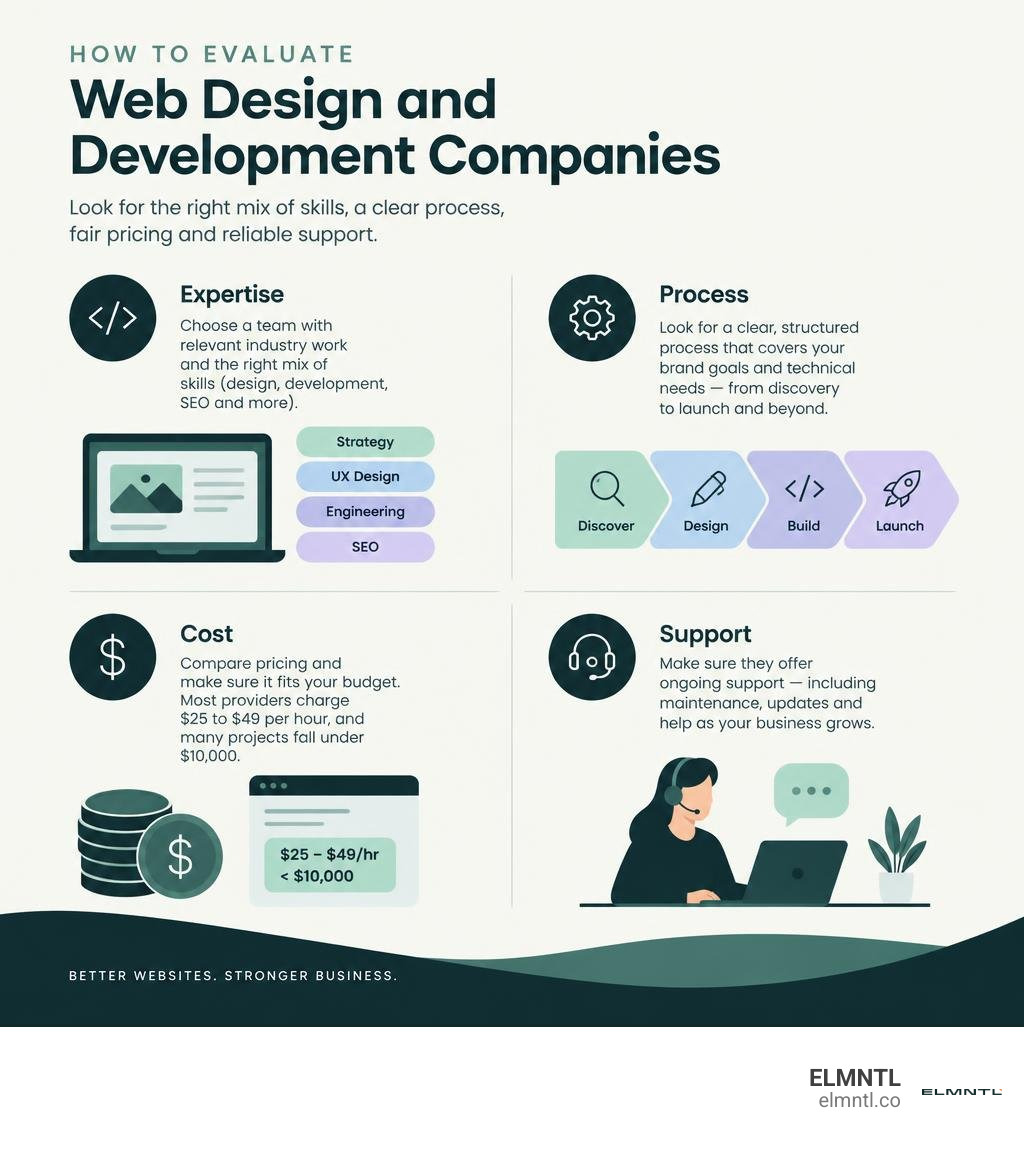
The best web design and development companies combine strategy, UX design, engineering, SEO, and post-launch support. Start by choosing firms with relevant industry work, clear pricing, responsive communication, and a process that covers both your brand goals and technical needs.
With 95,528 web development companies listed on Clutch as of September 2026, narrowing the field matters. Compare portfolios, verify who will own the code, ask how maintenance works, and make sure the team can build for performance, accessibility, and future growth, not just a polished launch day.
A strong partner can turn an underperforming site into a clearer brand experience, a more useful sales tool, and a foundation for integrated marketing. Most providers charge $25 to $49 per hour, while many reviewed projects fall below $10,000, though custom and enterprise builds can require far more depending on scope. For a broader view of how these roles fit into the digital ecosystem, the web development process spans everything from front-end interfaces to back-end infrastructure.
Similar topics to web design and development companies:
Core Services Delivered by Leading Web Design and Development Companies
Modern web development goes far beyond writing clean HTML, CSS, or JavaScript. When you engage top-tier agencies, you are hiring a multidisciplinary unit capable of translating brand positioning into interactive, high-converting digital products. These organizations bring together strategists, designers, engineers, and marketers to build solutions that drive sustainable commercial growth.
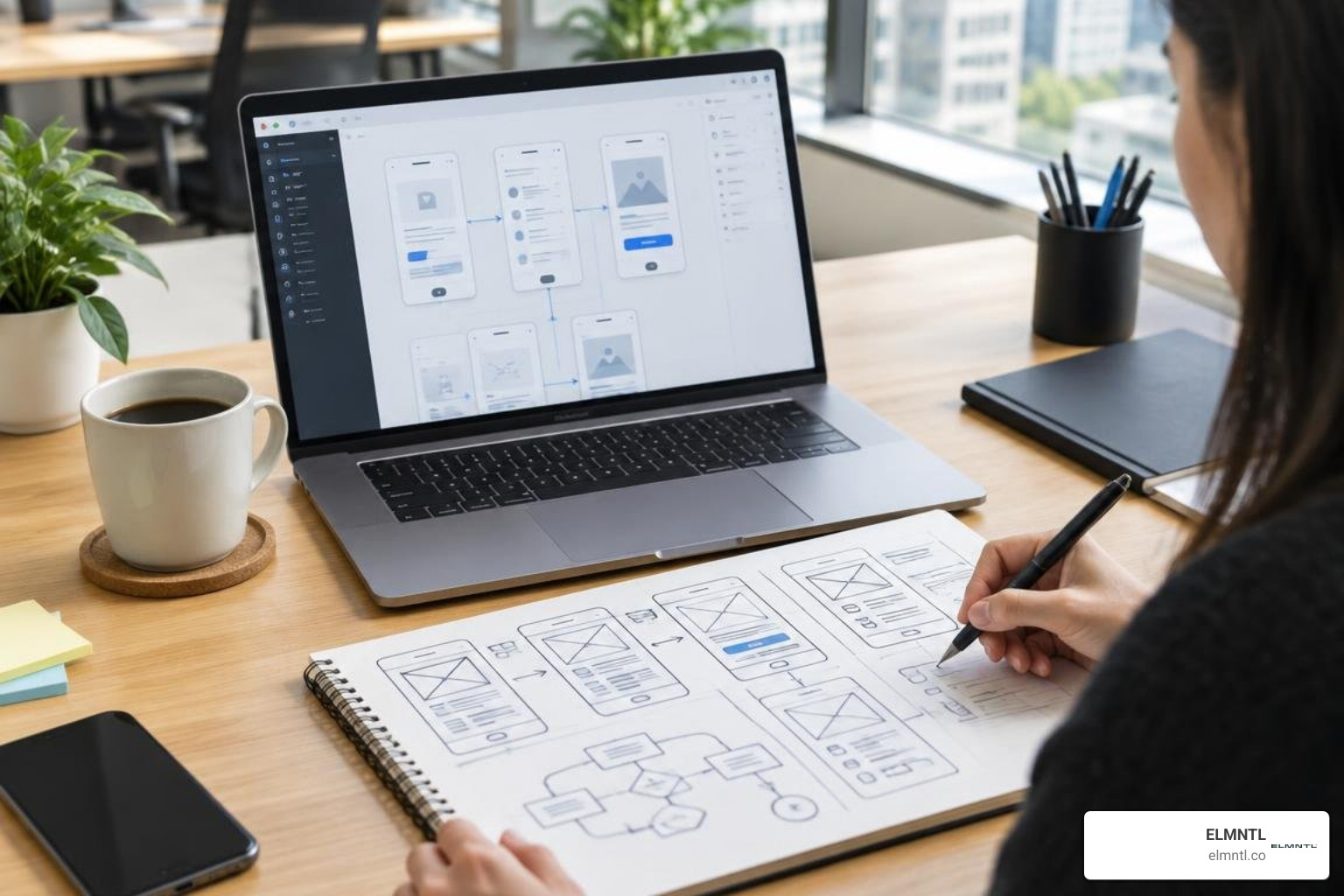
The foundation of every great build begins with research and user experience (UX) architecture. Agencies map out user personas, journey maps, information hierarchies, and wireframes to ensure that visitors intuitively find the answers or products they need. From there, user interface (UI) designers create responsive, aesthetically engaging layouts that reflect your visual identity and maintain consistency across all viewports.
Beyond the visuals, top agencies excel at crafting flexible content systems. Whether your business requires custom WordPress development experts to deliver an editable publishing workflow or a bespoke platform outlined in our complete guide to custom CMS development, elite firms structure platforms around your editorial and operational requirements. They also integrate e-commerce engines, payment gateways, CRM databases, and marketing automation tools, ensuring that your website seamlessly coordinates with your overarching customer acquisition funnels.
End-to-End Solutions from Web Design and Development Companies
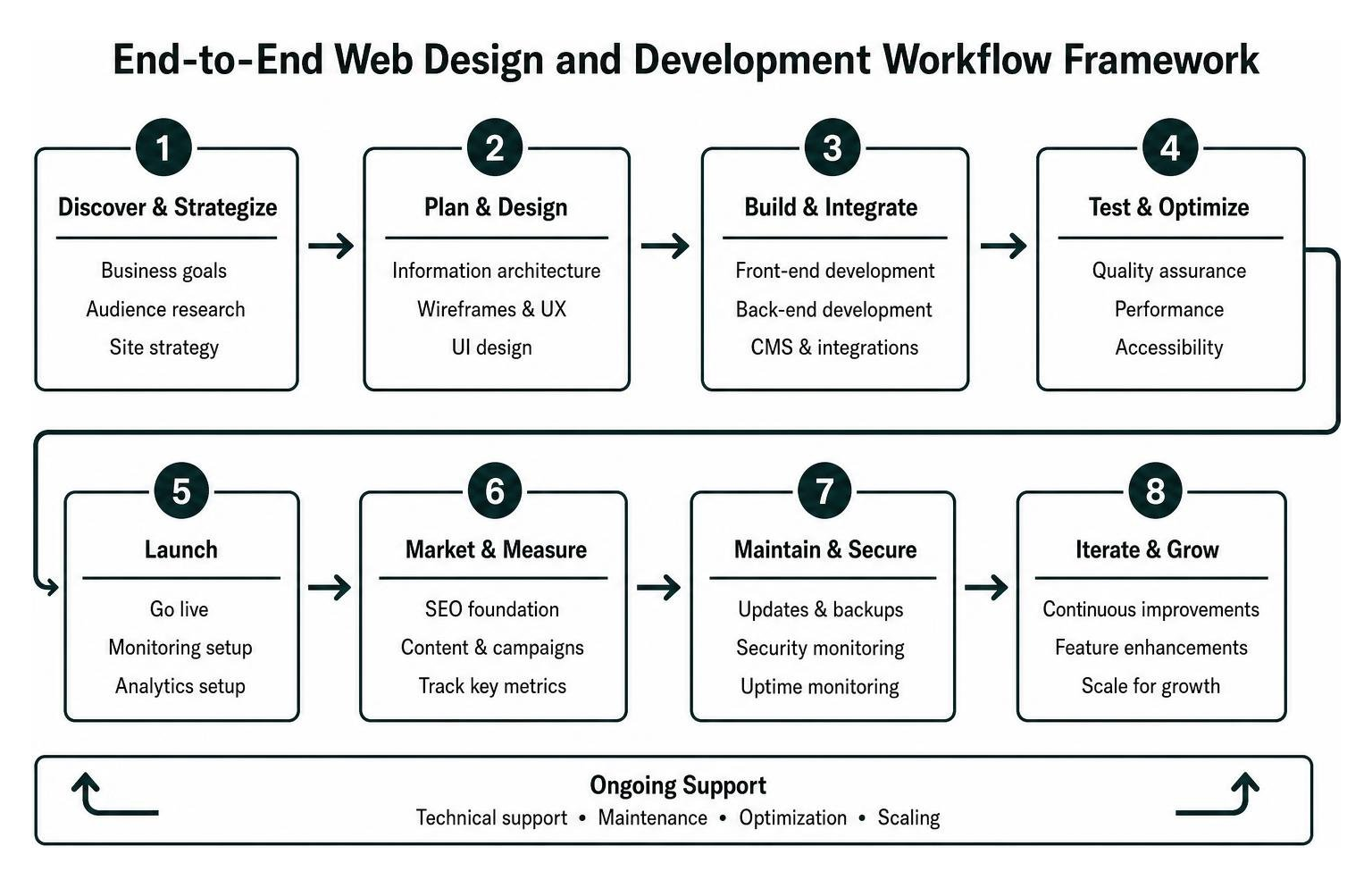
True end-to-end solutions encompass both client-side presentation and server-side logic. On the front end, developers craft lightweight, dynamic interfaces using modern frameworks such as React, Vue, or Next.js. On the back end, engineers architect secure database structures, manage cloud server environments, and connect third-party APIs.
For organizations handling heavy traffic, complex data relationships, or multi-brand portfolios, learning how to build a scalable enterprise website is essential. Advanced agencies incorporate AI-driven capabilities such as personalized content feeds, intelligent chatbots, and predictive search, giving growing brands a distinct competitive edge in user engagement.
Ongoing Maintenance and Technical Optimization
A website launch is simply the start of a digital product’s lifecycle. Without proactive upkeep, platforms quickly accumulate technical debt, vulnerability exposures, and performance bottlenecks that degrade user trust and search rankings.
Foundational upkeep is covered in our website support 101 resource, but growing brands often turn to managed web services for performance security to handle regular core updates, database optimization, firewall management, and real-time uptime monitoring. Partnering with a dedicated agency also ensures you stay aligned with the best practices found in our complete guide to website performance, protecting your core web vitals and organic visibility.
Web Development Cost Breakdown and Pricing Models in 2026
Pricing for web design and development services varies widely based on technical complexity, customization level, and agency expertise. Understanding these pricing tiers helps you budget effectively and select a provider that matches your project scope.
Industry benchmarks in 2026 reveal that many global development agencies offer hourly rates ranging between $25 and $49 per hour. Smaller, foundational websites often launch within budgets of $10,000 to $49,000. However, fully custom web applications, complex multi-regional platforms, and enterprise-grade builds often range from $50,000 to well over $200,000.
Investing in custom architecture pays substantial dividends in conversion rates and operational efficiency. We explore this dynamic thoroughly in our breakdown of the business case for professional custom web design services.
| Pricing Tier | Typical Budget Range | Core Deliverables | Ideal For |
|---|---|---|---|
| Foundational / Small Business | $10,000 – $25,000 | Custom template design, CMS integration, essential SEO, 5–15 core pages | Local businesses, service providers, early-stage startups |
| Growth / Mid-Market | $25,000 – $75,000 | Bespoke UI/UX design, custom CMS workflows, API integrations, basic e-commerce | Scaling brands, B2B companies, high-traffic content sites |
| Custom Enterprise | $75,000 – $200,000+ | Advanced microservices, headless architecture, custom portals, high-security data compliance | Multi-brand enterprises, complex SaaS platforms, global e-commerce |
Agency vs. Freelancer: Key Advantages of Professional Firms
When commissioning a digital project, organizations often debate between assembling individual freelance contractors or hiring a dedicated agency. While individual contractors may offer lower hourly rates, agencies provide an integrated ecosystem of specialists designed to minimize project risk and ensure long-term stability.

A professional agency provides:
- Cross-Functional Collaboration: You gain immediate access to project managers, UI designers, UX strategists, front-end developers, back-end engineers, and SEO specialists working in unison to solve complex digital challenges.
- Structured Quality Assurance: Agencies employ dedicated QA testers to validate responsiveness, browser compatibility, accessibility standards, and load speeds before anything goes live across production servers.
- Accountability and Continuity: Freelancers may become unavailable due to competing priorities or sudden schedule shifts. Agencies provide reliable service level agreements, redundant staffing, and continuous technical support.
- Strategic Scaling: As your business requirements expand, an established firm can instantly scale development resources without requiring you to source, interview, and onboard new individual talent.
- Integrated Digital Vision: Agencies evaluate how your digital infrastructure supports wider sales pipelines, conversion rate optimization, and brand equity over time.
To make the most of this collaborative partnership, review our checklist of 10 things to prepare before working with a web design agency to streamline your discovery phase.
How to Choose the Right Provider and Avoid Red Flags
Selecting the right development partner requires looking beyond flashy portfolio screenshots. You need to assess their engineering rigor, strategic capabilities, industry experience, and communication style.
Start by evaluating their past case studies. Look for tangible business outcomes, such as improved conversion rates, faster page load speeds, and measurable search visibility gains. In particular, determine how to choose the best SEO and website optimization partner so you do not sacrifice your hard-earned organic rankings during a platform transition. Before signing a contract, align your team with our ultimate SEO website redesign checklist to confirm your agency handles 301 redirects, URL structures, canonical tags, and metadata preservation properly.
Vetting Web Design and Development Companies for Critical Red Flags
During initial discovery calls, pay close attention to warning signs that indicate potential project issues down the road:
- Vague, Non-Itemized Estimates: If an agency provides a single flat-fee quote without a granular breakdown of deliverables, scope creep and unexpected billing disputes are almost guaranteed.
- Slow or Guarded Communication: If a team takes multiple days to respond during the sales cycle, their responsiveness will likely decrease further once the project begins.
- Absence of a Post-Launch SLA: Agencies that do not offer formal support agreements often abandon platforms immediately after launch, leaving your internal team to troubleshoot unexpected bugs alone.
- Ambiguous Code Ownership: Always ensure the contract explicitly states that your organization retains 100% intellectual property ownership of all custom design files, code repositories, and database schemas upon final invoice payment.
- Lack of Defined QA Procedures: Teams that cannot clearly outline their testing environments and browser compatibility protocols often test on live sites, introducing unnecessary operational risk.
Frequently Asked Questions
What questions should I ask before hiring a web development provider?
Ask about their primary technology stack, their project management and communication workflows, their code review procedures, and who will directly own the final codebase. Additionally, inquire about their post-launch warranty period and how they handle urgent bug fixes.
Which industries do web development firms specialize in?
Top agencies often specialize in sectors like B2B SaaS, healthcare, e-commerce, financial services, professional services, and higher education. Many seasoned firms bring cross-industry insights, applying proven UX patterns and security protocols from one sector to solve unique challenges in another.
What is the difference between web design and web development?
Web design focuses on the visual aesthetics, layout, typography, user interface, and user experience strategy. Web development involves the coding, server configuration, database architecture, and API integrations that bring those visual designs to life as a functional, interactive website.
Conclusion
Choosing the right development partner is one of the most critical digital investments your organization can make. A well-engineered platform elevates brand credibility, streamlines internal operations, and delivers consistent commercial returns.
At ELMNTL, we bring over 15 years of award-winning expertise in digital strategy, integrated marketing, and performance-driven development. If you are ready to elevate your digital presence with a website designed for measurable growth, explore our comprehensive web design and digital marketing services today.