
The Core Foundations of Modern Brand Building
Proven brand awareness strategies that actually work include educational content ecosystems, freemium product flywheels, multi-channel consistency, and co-marketing partnerships. These approaches build mental recall and trust long before buyers enter an active procurement cycle. Building a memorable business requires much more than running transactional ad campaigns. When we look at enduring companies, their market dominance stems from deliberate brand identity, memorable visual symbols, and relatable storytelling. Humanizing a brand transforms cold software or complex services into trusted advisors that customers actively want to associate with.
A strong identity starts with understanding the fundamentals of building a strong brand identity. It anchors your core mission, your tone of voice, and the emotional resonance you cultivate with your market. When your organization maintains clarity on its purpose, every touchpoint reinforces audience trust.
To create sustainable recall, organizations must also master how to create a cohesive brand identity in marketing. This requires establishing distinct visual guidelines, unified messaging pillars, and a brand personality that feels human. HubSpot exemplifies this by pairing its signature sprocket logo with its empowering mission, “Grow better with HubSpot,” ensuring that every interaction reinforces empowerment rather than software complexity.
Differentiating Brand Visibility from Brand Awareness
While marketers often use brand visibility and brand awareness interchangeably, they represent two fundamentally different stages of the customer journey:
- Brand Visibility: The external presence, frequency, and prominence of your brand across channels, such as search engines, social media feeds, and partner networks.
- Brand Awareness: The internal cognitive recall, emotional trust, and memory retention stored inside a buyer’s mind.
Visibility is the catalyst; awareness is the result. You cannot build deep psychological recall without consistent external exposure. Exploring strategic approaches to brand visibility demonstrates how dominating category search terms, earning third-party media citations, and maintaining high share of voice lay the groundwork for true brand equity.
The Power of Multi-Channel Consistency
In B2B markets, roughly 95% of prospective buyers are out-of-market at any given moment. If your organization only engages buyers when they enter an active procurement cycle, you are already behind. Research shows that consistent brand presentation across multiple channels can increase revenue by up to 23%.
When your visual symbols, messaging, and values remain harmonious across your website, organic social profiles, email newsletters, and paid media, you build cumulative trust. Mastering this alignment involves integrating marketing across every touchpoint so your audience experiences a seamless brand narrative regardless of where they first discover you.
The Blueprint: Analyzing HubSpot Brand Awareness Strategy
HubSpot has evolved from a niche marketing tool into a global enterprise generating over $3.1B in annual revenue and employing more than 16,950 professionals. Its market capitalization and widespread recognition did not happen by accident. Instead, HubSpot engineered a self-reinforcing flywheel powered by education, frictionless product access, and community advocacy.
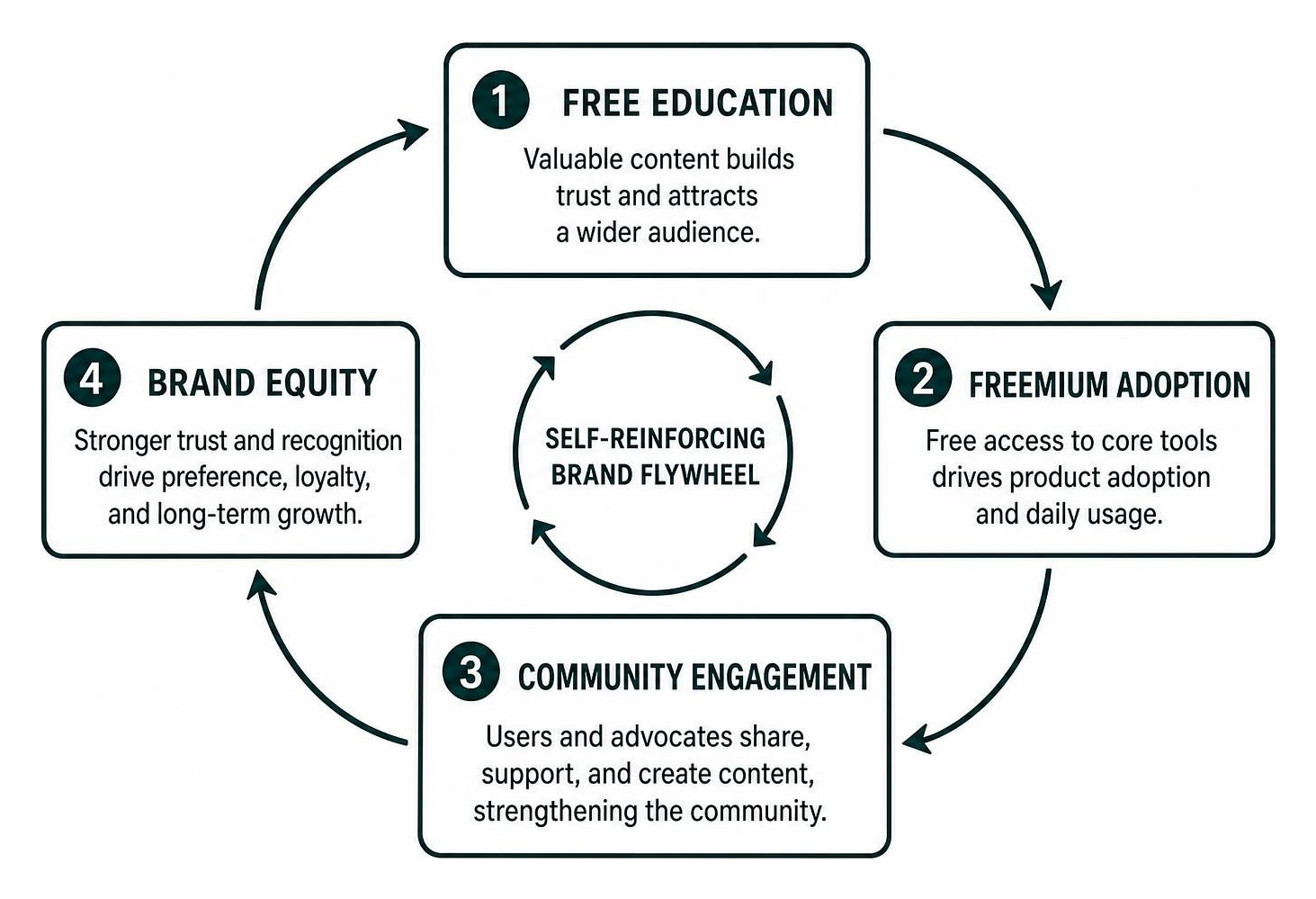
The primary growth levers powering the HubSpot brand awareness strategy include:
- Radical Content Generosity: Offering comprehensive, free educational resources, templates, and certifications that solve real-world problems.
- The Freemium Flywheel: Providing free access to core CRM tools that embed product utility and brand logos directly into daily business operations.
- Decentralized Social Engagement: Empowering leadership and employees to build active social selling presences, engaging more than 1.7 million LinkedIn followers.
- Vibrant User Communities: Fostering power-user advocacy programs like HubFans that reward community participation and peer-to-peer education.
Content Ecosystems, Media Networks, and Freemium Expansion
HubSpot revolutionized digital marketing by transforming its blog and resource library into a primary destination for business education. Rather than guarding insights behind aggressive sales barriers, HubSpot created massive organic reach through actionable guides, templates, and the HubSpot Academy. Expanding into the HubSpot Podcast Network further deepened audience engagement, capitalizing on the reality that over one-third of adult media consumers regularly listen to podcasts.
Concurrently, HubSpot’s freemium model operates as an ongoing brand awareness engine. When teams use free tools, they continuously encounter the brand’s interface, creating organic familiarity.
| Dimension | Freemium Product Flywheel | Traditional Gated Content |
|---|---|---|
| User Barrier to Entry | Minimal; immediate self-serve utility | High; form friction for PDF downloads |
| Brand Exposure | Daily, active in-app interaction | Ephemeral; static read-once consumption |
| Virality & Expansion | High; team invites and branded badges | Low; localized to individual downloaders |
| Trust Generation | Real-time product value demonstration | Theoretical domain expertise claims |
Strategic Co-Marketing and Integration Ecosystems
Beyond native content, HubSpot broadens its reach through co-marketing campaigns, joint research studies, and deep platform integrations. By partnering with leading technology platforms, HubSpot inserts its brand directly into surrounding business workflows.
For instance, automated connectors like Zapier enable bidirectional synchronization between project management platforms such as Asana and HubSpot CRM. When an Asana task update automatically advances a deal stage in HubSpot, both platforms cement their value in the user’s daily stack. Implementing these proven frameworks for building a brand awareness strategy allows growing brands to leverage partner audiences, expanding credibility without multiplying ad spend.
Next-Generation Brand Visibility: AI, AEO, and Search Evolution
As digital discovery shifts toward artificial intelligence, traditional search engine dynamics are transforming. Generative AI tools and Answer Engine Optimization (AEO) require brands to optimize not just for search result clicks, but for citations inside AI synthesized answers.

Modern brand visibility requires being recognized by large language models as a definitive entity. HubSpot has embraced this evolution by introducing AI capabilities such as Breeze Assistant, unified Marketing Studio tools, and direct connectors for AI-driven advertising channels.
Adapting Content for Generative AI and Entity Recognition
To remain visible in an AI-mediated landscape, marketing leaders must structure digital assets for entity recognition. This includes publishing authoritative thought leadership, embedding explicit structured data schemas, and maintaining consistent data across global directories, knowledge bases, and industry publications.
Balancing these evolving formats requires navigating inbound marketing versus content marketing with precision. Content must answer specific user intent directly while establishing clear, defensible points of view that AI engines identify as primary source material.
How HubSpot Brand Awareness Drives Pipeline and Revenue
Brand awareness directly accelerates pipeline velocity and sales efficiency. Industry data reveals that 68% of B2B buyers enter the procurement cycle with a preferred vendor already selected, and they choose that front-runner 80% of the time. When your brand establishes high awareness during the 95% of the time buyers are out-of-market, your sales team enters deal conversations with immediate credibility.
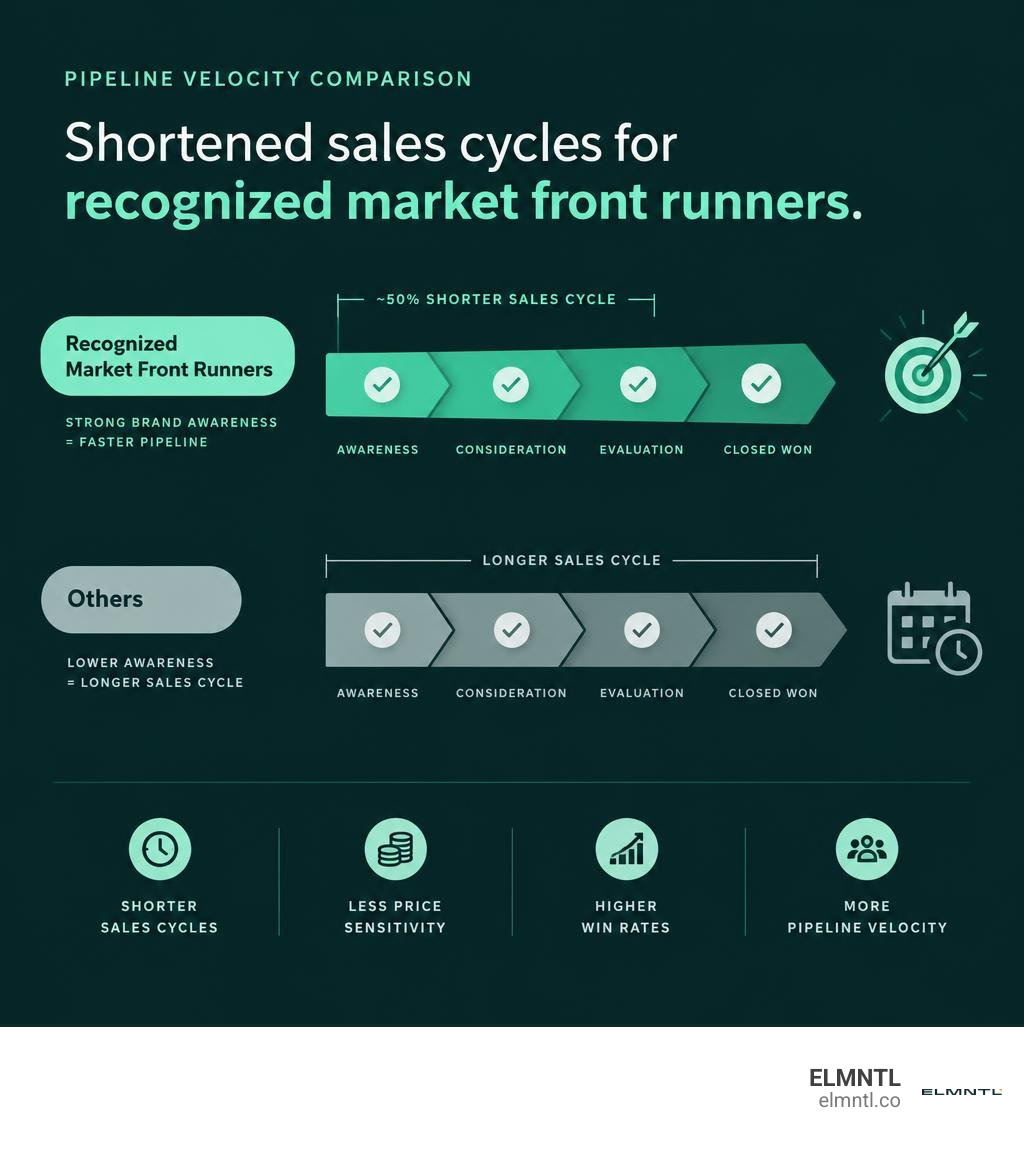
This pre-existing familiarity cuts sales cycles nearly in half, minimizes price sensitivity, and boosts deal win rates. Accurately tracking marketing ROI across awareness initiatives ensures that leadership attributes pipeline creation not just to final click conversions, but to the compound awareness that influenced the purchase.
Tracking and Scaling Brand Equity Across Channels
Because brand building impacts buyers over months and years, measuring awareness requires blending quantitative data with qualitative sentiment tracking. Relying solely on direct attribution models risks undervaluing top-of-funnel initiatives.

A comprehensive measurement framework combines direct website traffic, branded search volume, social sentiment, and share of voice across traditional search and generative AI engines.
Measuring HubSpot Brand Awareness in the Modern Tech Stack
To assess brand health accurately, modern marketing teams track specific core indicators:
- Share of Search: Your brand’s percentage of search query volume compared to key competitors within your market category.
- Branded Search Volume: Total searches for your company name, reflecting organic recall and offline word-of-mouth.
- Share of AI Visibility: The frequency with which large language models cite your brand as a recommended solution for category queries.
- Direct Traffic Trends: Visitors entering your domain directly into browser bars, demonstrating unprompted recall.
- Social Listening & Mentions: Active monitoring of community sentiment, brand discussions, and customer reviews using tools like community dashboards tracking brand mentions.
Scaling Demand with Integrated Leadership
Successfully executing an omnichannel brand awareness strategy requires tight coordination across design, content, performance media, and technology. When internal teams become siloed, brand messaging fragments, diluting market recall and wasting capital.
Organizations often bridge this capability gap by partnering with an integrated agency that aligns creative storytelling with technical execution. Alternatively, growing businesses can scale their strategic vision by hiring a fractional CMO for brand strategy to build unified marketing systems that turn visibility into measurable revenue.
Frequently Asked Questions About Brand Awareness Strategies
What is the most effective way to measure brand awareness in 2026?
The most effective approach combines leading and lagging indicators. Track branded search volume and direct website traffic in Google Search Console and analytics tools to evaluate mental brand recall. Monitor your Share of Search relative to competitors, track brand citation rates inside generative AI search engines, and use CRM multi-touch attribution reports to assess how awareness touchpoints assist downstream pipeline conversions.
How does a freemium model accelerate brand awareness?
A freemium model lowers adoption friction, allowing users to experience product value without procurement delays. As users integrate the free product into daily workflows, embedded brand badges, watermarked shared dashboards, and collaboration features turn regular users into active brand advocates, driving continuous word-of-mouth growth.
What is the difference between brand awareness and Answer Engine Optimization (AEO)?
Brand awareness represents the mental recall, recognition, and emotional trust held by human buyers. Answer Engine Optimization (AEO) is the technical and content strategy used to ensure AI engines, chatbots, and generative search interfaces recognize your brand as an authoritative entity and cite your business in synthesized answers.
Conclusion
Building lasting brand equity is a compounding investment, not a short-term marketing campaign. By aligning clear brand positioning, generous educational content, ecosystem integrations, and modern AI visibility, HubSpot created a blueprint for sustainable growth. When you prioritize consistent value delivery across every customer touchpoint, your brand becomes the natural front-runner long before your prospects enter an active buying cycle.
To build an integrated presence that turns market attention into measurable pipeline, explore integrated marketing solutions to scale your brand presence and drive sustainable business growth.