

Personal Branding Website Templates That Help You Stand Out
The best personal branding website templates make your value clear fast. Choose one with a strong hero section, project or case-study blocks, social proof, a simple contact path, and mobile-responsive design. Then customize the colors, fonts, images, and copy so the site looks and sounds like you, not like a template.
A great personal site is more than an online resume. It is a home base you control, where prospects can understand what you do, see proof of your work, and take the next step, whether that is booking a call, joining your list, or viewing your portfolio. This roundup covers standout options for creators, consultants, job seekers, speakers, and business owners across no-code, WordPress, HTML, and design-first platforms.
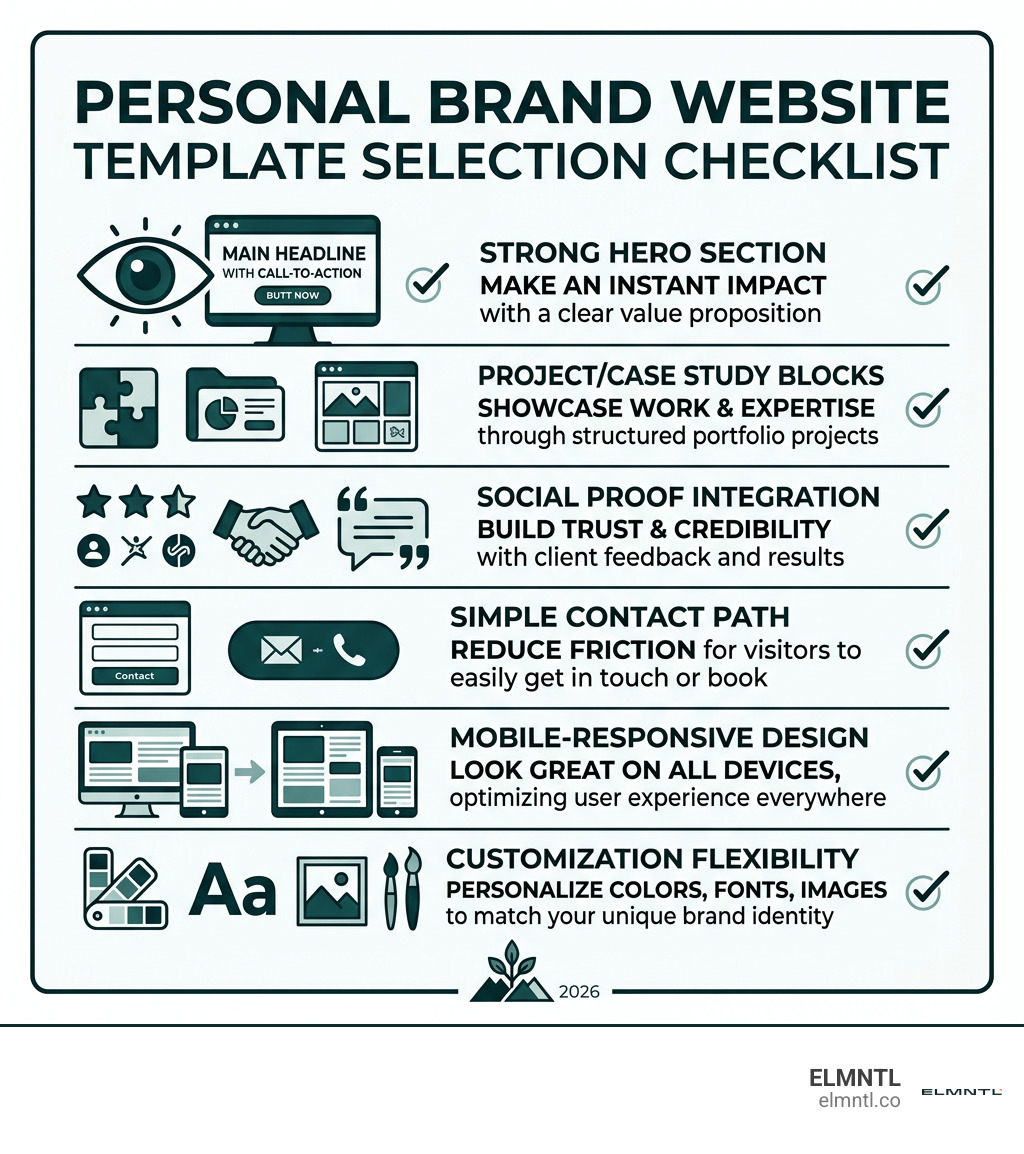
Personal branding website templates word roundup:
Core Anatomy of High-Converting Personal Branding Website Templates
When someone lands on your page, you have roughly ten seconds to convince them they are in the right place. An effective digital presence is not just a digital business card. It functions as your round-the-clock ambassador, communicating your authority and steering visitors toward a clear next step.
Every high-performing template centers around an unambiguous hero statement. Your hero section needs three things: a high-resolution portrait, a concise headline explaining who you help and how, and an immediate call to action. From there, the layout should naturally unfold your value proposition, balancing narrative elements with data-backed achievements.
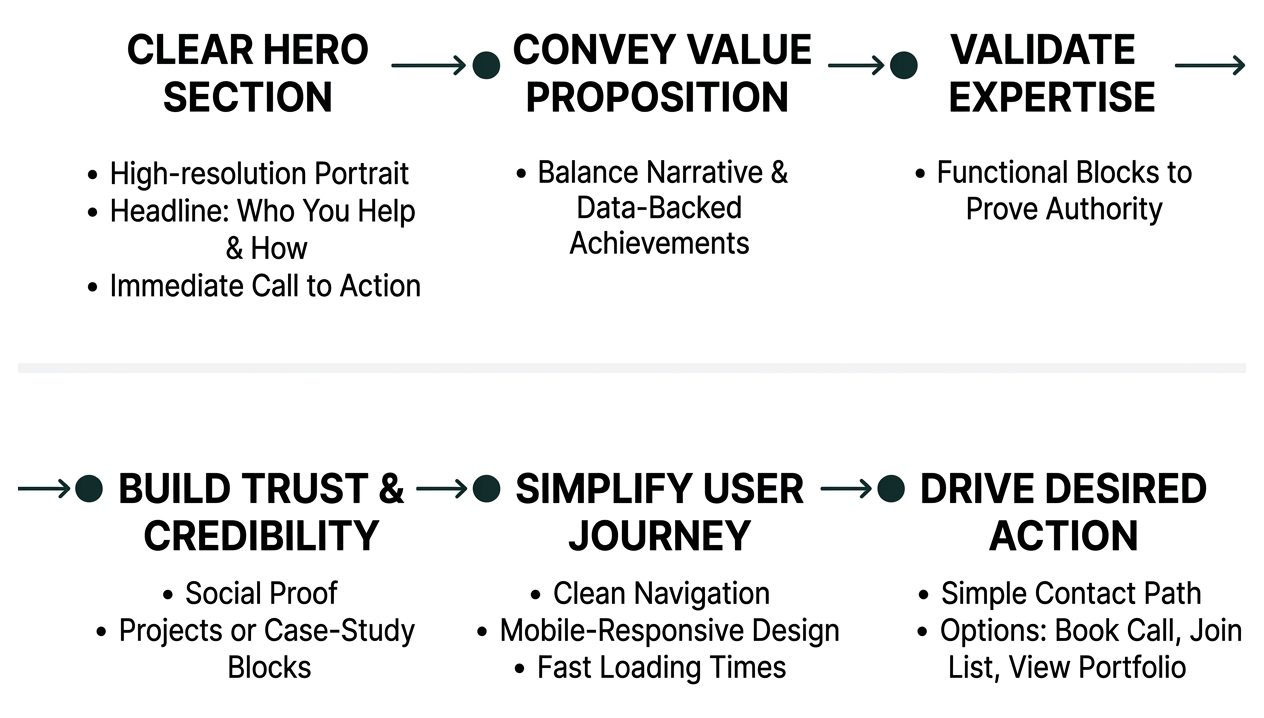
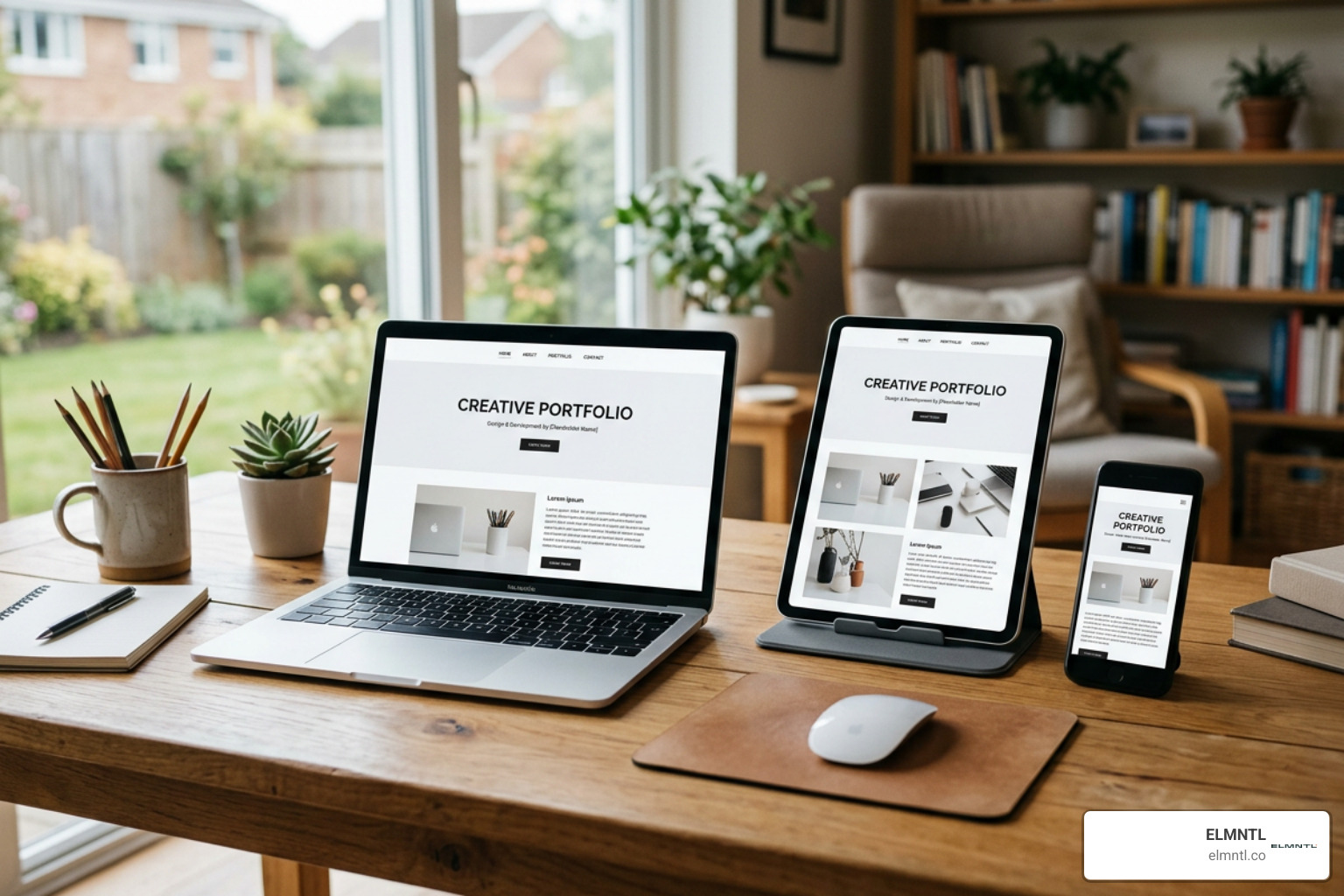
A major element in effective digital architecture is understanding the role of branding in website design. Design choices must echo your positioning. If your template is clunky, visual trust evaporates. Since the majority of web traffic comes from mobile devices, responsive layouts, fast loading times, and clean navigation are non-negotiable fundamentals.
Essential Sections for Conversion and Authority
To convert passive visitors into paying clients, subscribers, or employers, your template must house specific functional blocks that validate your expertise.
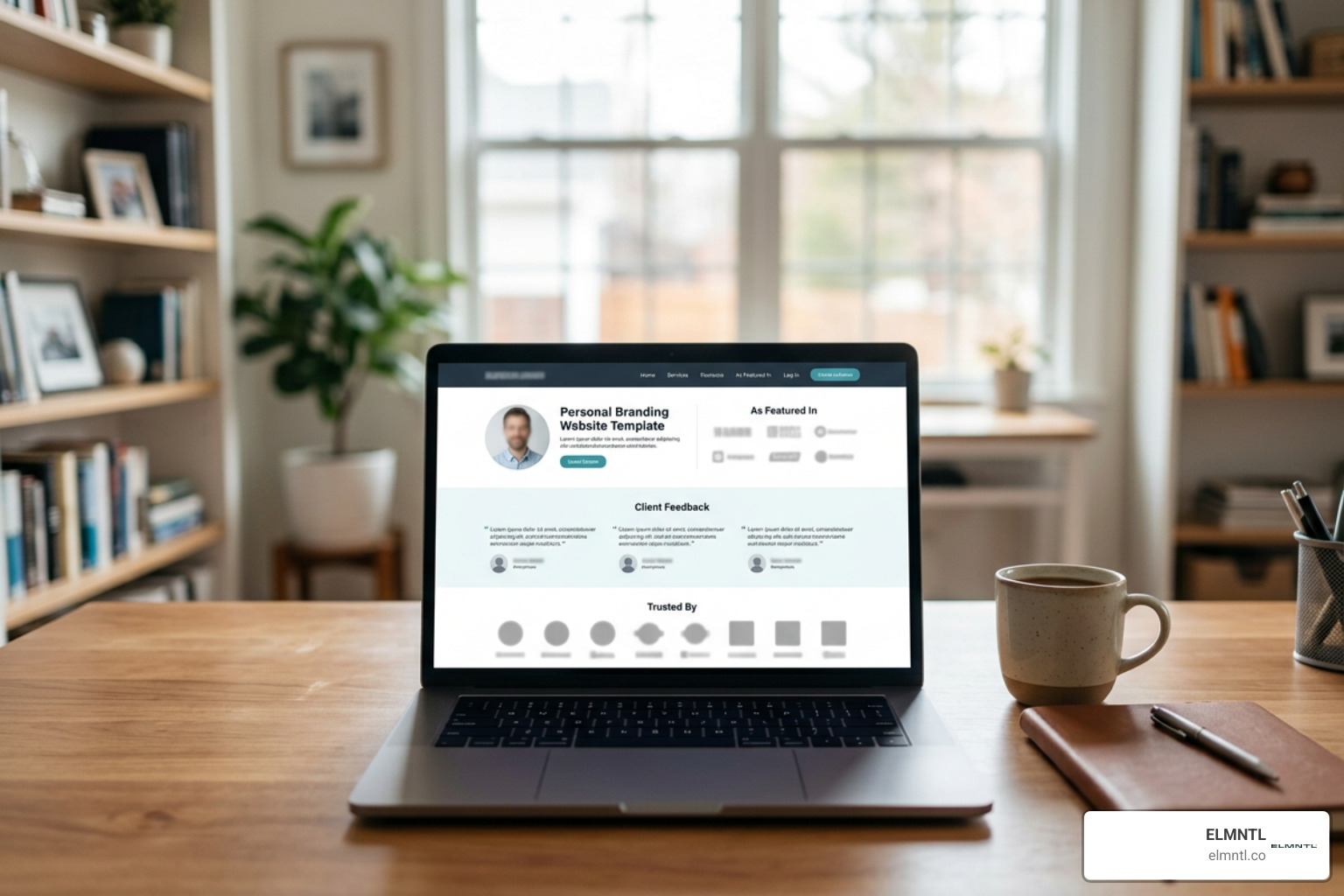
- Hero Value Statement: A clear introduction paired with a strong professional portrait.
- Authority and Social Proof Blocks: Client logos, publications where you have been featured, podcast appearances, and verified reviews.
- Flagship Work Grid: A curated showcase of your best projects or case studies, prioritizing quality over sheer volume.
- Lead Capture and Booking Integration: An embedded scheduling tool (such as Calendly) or a clean newsletter sign-up form to capture leads immediately.
- Bio and Storytelling Section: A focused narrative outlining your background, core philosophies, and what makes your approach distinctive.
Interactive Resumes vs. Creative Portfolios
Selecting the right framework depends on whether you need a comprehensive personal hub or a visual showcase.
A creative portfolio template focuses on visual assets, filterable media galleries, and process walkthroughs. In contrast, an interactive personal branding template bridges career timelines, skill proficiency indicators, interactive resume sections, and long-form written insights. If you are exploring how layout hierarchies function from the ground up, reviewing a beginners guide to web design can clarify how visual balance influences audience retention.
| Feature / Goal | Personal Branding Website Template | Creative Portfolio Template |
|---|---|---|
| Primary Objective | Establish holistic authority, thought leadership, and drive service inquiries | Showcase visual work samples, case studies, and creative deliverables |
| Core Sections | Bio, media features, speaking topics, interactive resume, blog, booking form | Project grid, media lightboxes, client list, creative process breakdown |
| Audience Focus | Potential clients, conference organizers, consulting leads, employers | Creative directors, design agencies, art buyers, gallery curators |
| Content Dynamic | Blends story, services, downloadable CV, and multi-revenue streams | Visual-heavy, minimalist text, focus on aesthetic execution |
| CMS Capabilities | Robust blogging, dynamic lead generation, newsletter archives | Case study categorization, tag filtering, high-res image hosting |
Top Personal Website Templates by Platform and Use Case
The marketplace offers thousands of ready-made designs. On Behance alone, there are over 10,000 results for personal website templates, reflecting a massive appetite for distinctive online portfolios. On ThemeForest, premium options typically range from $6 for basic HTML to $69 for complete WordPress and Elementor systems. Let us explore the leading options across modern platforms.
Modern Framer and No-Code Personal Branding Website Templates
Framer and visual no-code builders have revolutionized website creation, offering silky-smooth micro-animations, fast CDN hosting, and layout control without writing a line of code.
For keynote speakers, executive coaches, and corporate trainers looking to command higher fees, the FORGE RHODES Framer template is a standout choice. It delivers a bold, conversion-focused layout with dedicated sections for speaking topics, past event highlight reels, and direct booking inquiry modules.
If you are a multi-hyphenate creator running podcasts, digital products, and coaching cohorts, the Creator | Entrepreneur & Personal Brand Template provides a modular, multi-revenue layout. It integrates YouTube and podcast embeds directly into the hero area while utilizing automated SEO metadata structures.
For those wanting an AI-assisted build, tools like the Personal Brand Website with AI — RationalGo App Builder or the AI Personal Website Builder | CodePup AI can generate entire personal frameworks, project grids, and contact setups from simple prompts.
WordPress, HTML, and Figma Personal Branding Website Templates
WordPress remains the powerhouse of customizable web design, especially when paired with Elementor or Gutenberg block editors.
On marketplaces like ThemeForest, you will find extensive kits catering to specific career profiles. Popular examples include:
- Noxfolio: A dedicated personal portfolio and resume WordPress theme that has earned 94 sales, featuring robust CV timeline components and dark-mode styling.
- Ramsay: A creative one-page HTML template with 167 sales, built for developers and freelancers who prioritize lightweight, fast-loading code.
- Risy: An Elementor kit tailored for content creators and mentors looking to sell coaching packages.
If you are prototyping in design software or want a fast, zero-cost visual builder, exploring Free personal website templates to customize – Canva gives you access to dozens of drag-and-drop layouts. Canva provides 56 templates tailored specifically for personal websites, making it simple to test color palettes and typography before full deployment. You can also explore thousands of designer-vetted options across Personal Branding Website Templates – ThemeForest or study award-winning layouts like the Jonny Czar Portfolio on Behance, which has garnered over 3,782 appreciations.
One-Page vs. Multi-Page Layout Architecture
One of the most common dilemmas is deciding between a single-page scrolling layout and a structured multi-page site.
A one-page template keeps your narrative tightly focused. It guides the reader through a linear storyline: who you are, what you do, your best work, and how to get in touch. This format is ideal for freelancers, keynote speakers, or job seekers with a single primary offer.
A multi-page architecture suits professionals who publish regular thought leadership articles, manage separate service lines, or want detailed case study breakdowns. Multi-page sites naturally offer more surface area for organic search indexing, allowing you to rank for distinct long-tail keywords across different industries.
How to Customize and Align Templates with Your Visual Identity
A template is simply a wireframe. If you leave default fonts, stock photography, and boilerplate text intact, you will blend into the digital noise. Personalizing your site requires mastering the art of developing your personal brand identity so that your values and expertise shine through every pixel.
Typography, Color Palette, and Visual Consistency
Visual consistency builds immediate trust. Your typography and color choices should evoke specific emotions and reflect your industry standing.
When choosing fonts, pair a distinctive heading typeface (such as an elegant serif for thought leaders or a modern geometric sans-serif for tech consultants) with a readable body font. Maintain generous whitespace to ensure readability across all screen dimensions.
For your palette, select one dominant base tone, a contrasting background, and a vibrant accent color reserved strictly for buttons and key links. For an in-depth look at structuring these visual elements, explore our guide to visual branding along with our comprehensive a-z guide to website branding.
SEO Fundamentals and AI-Powered Personalization
A stunning website will not generate opportunities if no one can find it. Mastering fundamental on-page SEO ensures your name and expertise appear when clients and recruiters search for your services.
- Optimize Meta Data: Customize your page title tags and meta descriptions to include your primary specialty (e.g., “Jane Doe | B2B SaaS Growth Consultant”).
- Structured Social Sharing: Configure OpenGraph tags and custom preview cards so your links display polished imagery when shared across platforms.
- Cross-Channel Synergy: Connect your site to your social channels. You can learn more about aligning these assets through our guide on personal branding 101 how to build your brand on social media.
- Content Architecture: Maintain an active blog or case study archive to target relevant industry keywords and establish search engine authority over time.
Frequently Asked Questions About Personal Brand Web Design
Can I build an effective personal brand website without coding skills?
Yes. Modern visual website builders and no-code platforms make it easy to assemble, style, and launch a polished website without writing any code. Using drag-and-drop editors, you can easily swap imagery, adjust typography, embed scheduling calendars, and connect custom domains in an afternoon.
Do personal website templates include built-in blog and SEO functionality?
Most contemporary templates built for WordPress, Framer, and modern CMS platforms include integrated blogging capabilities and automated SEO metadata fields. Publishing regular case studies and industry insights directly on your domain enhances search visibility while proving your expertise to prospective clients.
How do I make my personal website stand out from competitors?
To stand out, focus on clarity, authentic storytelling, and professional visual presentation. Ditch generic stock photos in favor of high-quality, genuine headshots. Clarify your unique value proposition within the first screen, and support your claims with verified testimonials, client results, and published case studies. Discovering how to develop a brand personality that people actually like will ensure your online home reflects a memorable voice.
Conclusion
Your personal brand website serves as the central anchor of your career. While social platforms and professional networks remain valuable for distribution, your website is the only asset you completely own and control.
Choosing a template is just the starting point. By customizing the layout with your visual identity, highlighting your flagship accomplishments, and optimizing for search and conversion, you transform a simple design framework into a powerful business asset. If you want a bespoke digital presence engineered to capture market authority, explore how our team at ELMNTL can support your growth through our specialized web design and marketing services.