

How to Find the Top UI/UX Companies for Your Project
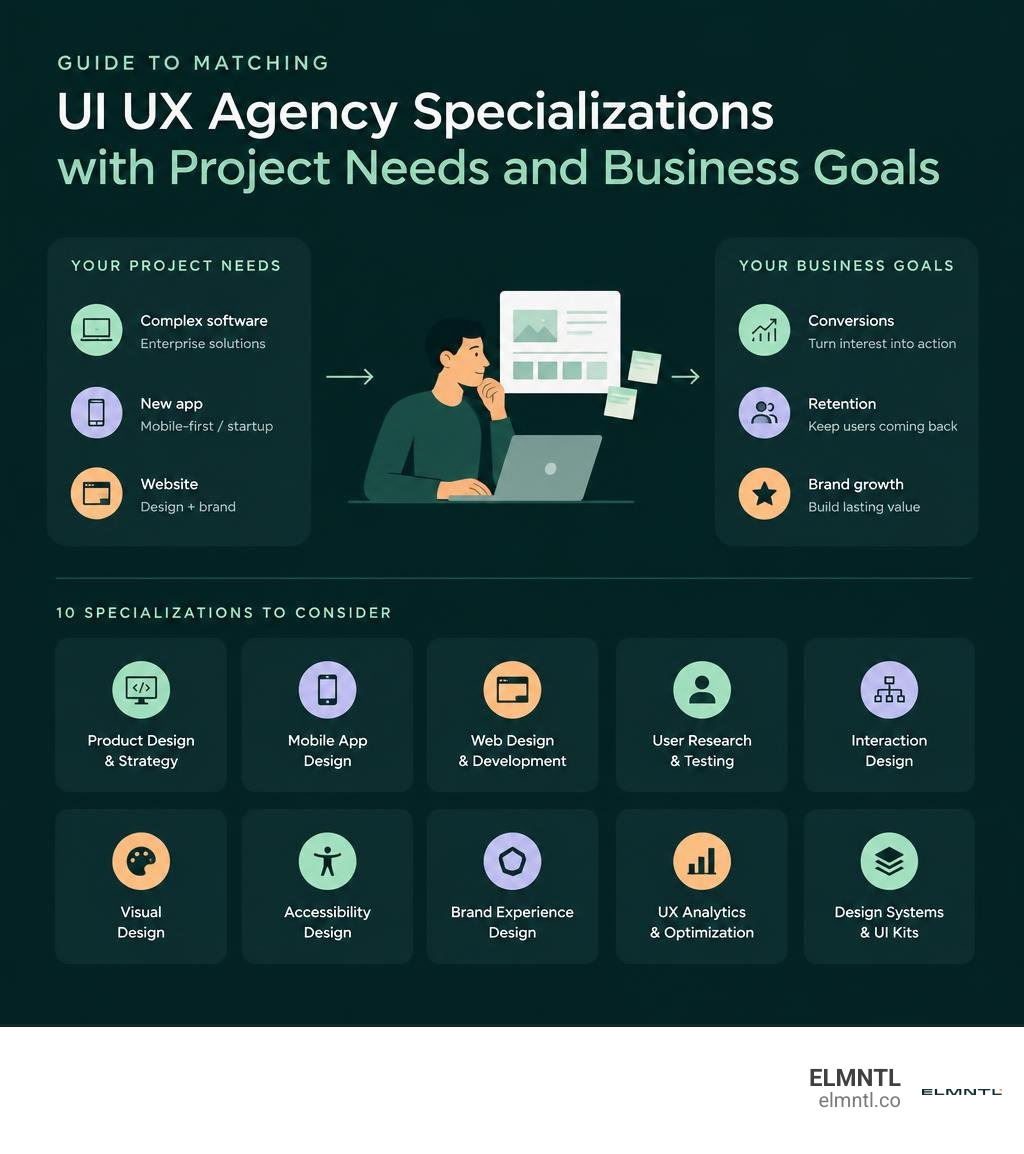
To find the top ui ux companies in 2026, start with your project, not an agency ranking. For complex software, look for teams with enterprise product experience. For a new app, focus on mobile-first or startup specialists. For a website, seek a partner that can connect clear design with your brand.
Ask each team to show a live product, explain how it tests designs with users, and share results tied to goals such as conversions or retention. The ten specializations below will help you build a shortlist and choose the right fit.
Related content about top ui ux companies:
10 Agency Specializations Setting New UI/UX Design Standards
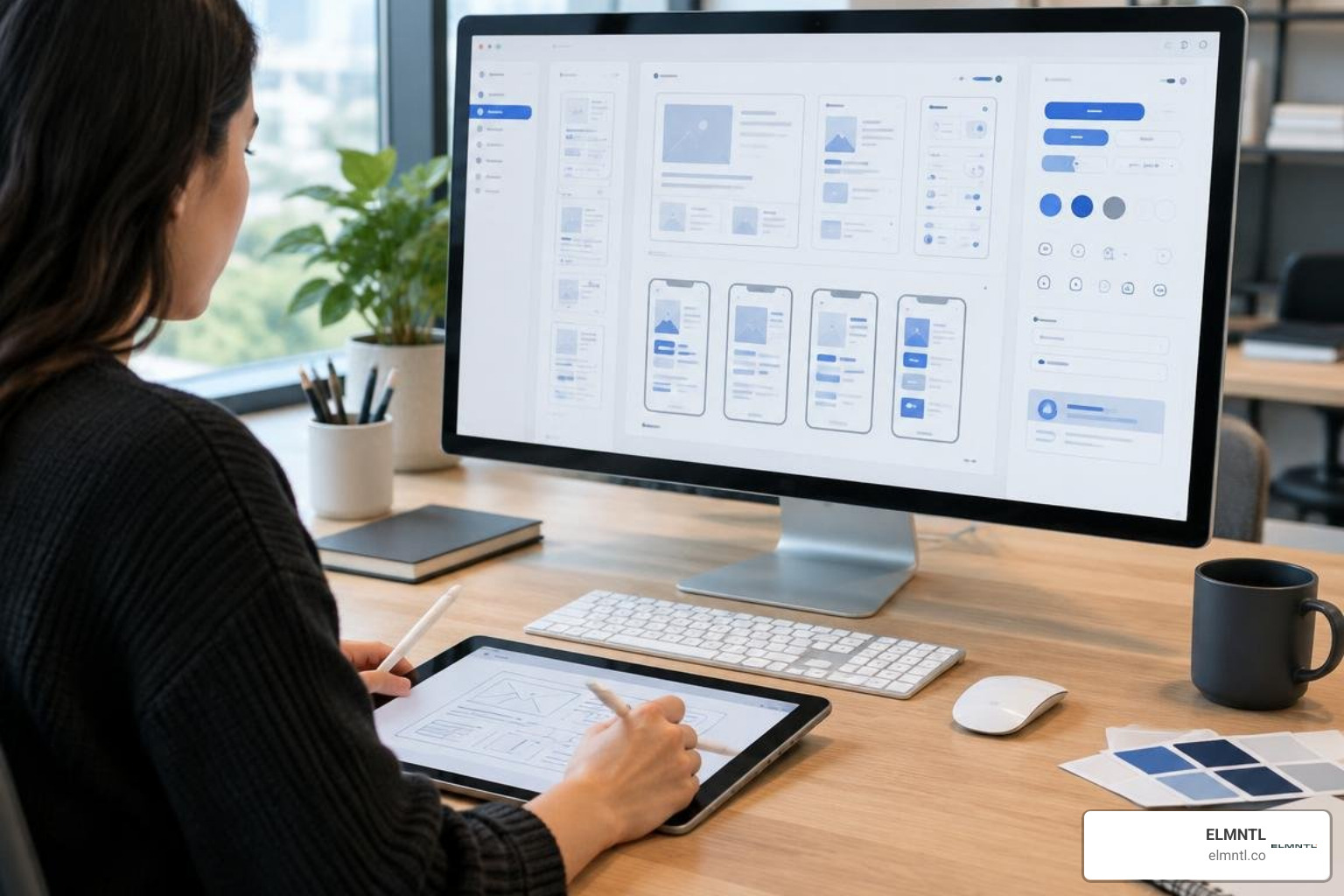
The digital landscape in 2026 demands more than attractive visual templates. Digital products must handle nuanced workflows, massive data volumes, and increasingly autonomous software systems. Choosing the right design partner requires evaluating specialized capabilities against your organizational goals.
Whether you need dedicated specialists for mobile-first brands or a team well-versed in international design benchmarks such as the ISO 9241-210:2019 standard for human-centred design, top UI/UX companies generally align across ten distinct practice areas.
1. Enterprise SaaS Platform Modernization Partners
Enterprise SaaS applications require deep operational design thinking. Modernization partners focus on untangling legacy enterprise software, organizing complex data dashboards, configuring granular role-based access flows, and creating automated workflows. These agencies prioritize data density without sacrificing readability, ensuring that power users can navigate hundreds of daily actions without cognitive fatigue or system-induced errors.
2. AI-Native Interface and Agentic Workflow Studios
As generative models and autonomous agents integrate into core business software, user interfaces must adapt. Studios specializing in AI-native design craft interfaces for non-deterministic states, shifting levels of user autonomy, variable model outputs, and multi-step approval checkpoints. They move beyond basic chat prompts to deliver rich multimodal UX that establishes clear tool boundaries, transparency, and trust between human users and automated systems.
3. Human-Centered Research and Usability Consultancies
Some organizations require deep empirical validation before committing capital to engineering. Pure-play research and usability consultancies focus on uncovering qualitative and quantitative customer realities through contextual user interviews, cognitive walk-throughs, eye-tracking validation, and baseline usability benchmarking. They map behavioral data to help product teams discover unarticulated user needs and eliminate costly architectural assumptions early.
4. B2B Product and Platform Transformation Agencies
B2B digital transformation firms specialize in shifting complex, paper-based, or fragmented internal tooling into streamlined web and mobile platforms. Their core focus is lowering employee onboarding timelines from weeks to days, removing friction in operational tools, and modernizing internal portals without disrupting daily enterprise operations.
5. Mobile-First Product and Application Innovators
Mobile-first agencies design specifically for touch interfaces, gesture navigation, dynamic island states, and responsive screen contexts across native iOS and Android environments. They excel at crafting micro-interactions, seamless haptic feedback loops, and progressive onboarding flows that capture customer attention within seconds and minimize day-one app churn.
6. Design System Architects and Multi-Brand Scalability Experts
Managing design consistency across dozens of global digital properties requires specialized governance. Design system agencies engineer modular component libraries, configure comprehensive design tokens, establish Figma file governance, and build cross-functional developer handoff documentation. Their frameworks cut engineering rework and keep cross-platform brands cohesive.
7. Brand-Led Digital Experience and Web Design Studios
When emotional connection, market differentiation, and storytelling drive business value, brand-led digital agencies excel. Understanding the role of branding in website design allows these teams to blend custom visual identities, typography, and interactive storytelling into immersive web products that convert visitors into loyal advocates.
8. Early-Stage Startup MVP and Rapid Prototyping Specialists
Startups navigating tight funding runways need rapid validation rather than extensive multi-quarter discovery tracks. MVP-focused studios specialize in building clickable, interactive prototypes within four to six weeks. These rapid prototypes allow founders to run live customer validation, pitch angel or venture investors, and establish clear engineering scopes before writing production code.
9. Cognitive Science and Specialized Accessibility Pioneers
Navigating stringent digital accessibility mandates across global markets requires deep technical compliance knowledge. Accessibility and cognitive science consultancies design interfaces meeting WCAG 2.2 AA and AAA criteria, European Accessibility Act standards, and ADA compliance rules. They focus on contrast ratios, screen reader optimization, tactile audio-visual cues, and error-prevention patterns for high-stakes industries like healthcare, public transit, and financial technology.
10. Integrated Design and Full-Stack Engineering Studios
To eliminate friction during the developer handoff phase, integrated studios pair senior interaction designers directly with software engineers. Offering end-to-end website design and development services, these teams build design systems that map directly to modern frontend codebases, such as React, Next.js, and advanced Webflow implementations, accompanied by strict quality assurance verification.
How Top UI UX Companies Structure Pricing and Engagement Models
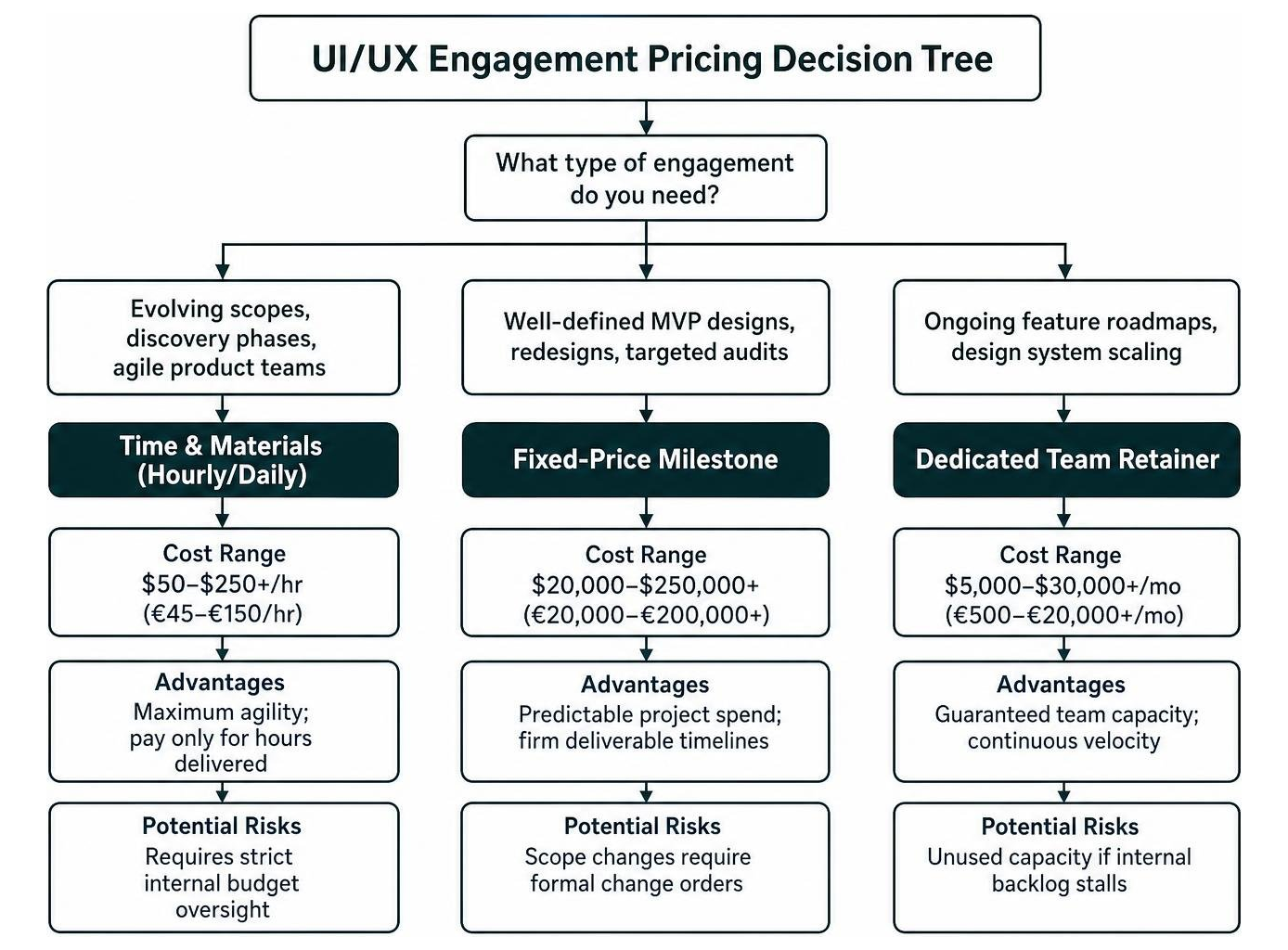
Understanding how UI/UX firms structure their engagements is critical for realistic budget allocation and scoping. Most reputable agencies operate under three primary commercial models:
| Pricing Model | Best Suited For | Typical Cost Range | Primary Advantages | Potential Risks |
|---|---|---|---|---|
| Time & Materials (Hourly/Daily) | Evolving scopes, discovery phases, agile product teams | $50–$250+/hr (€45–€150/hr) | Maximum agility; pay only for hours delivered | Requires strict internal budget oversight |
| Fixed-Price Milestone | Well-defined MVP designs, redesigns, targeted audits | $20,000–$250,000+ (€20,000–€200,000+) | Predictable project spend; firm deliverable timelines | Scope changes require formal change orders |
| Dedicated Team Retainer | Ongoing feature roadmaps, design system scaling | $5,000–$30,000+/mo (€500–€20,000+/mo) | Guaranteed team capacity; continuous velocity | Unused capacity if internal backlog stalls |
Hourly Rate Benchmarks in the US and Europe
Geographic distribution, talent seniority, and operational maturity heavily influence hourly rates:
- Central and Eastern Europe: Rates standardly range from €45 to €60 per hour for mid-level specialists, scaling to €70 to €100 per hour for senior strategic leads.
- Western and Northern Europe: Rates typically range from €70 to €150 per hour depending on studio specialization and local market dynamics.
- United States: Boutique studios and mid-tier regional hubs charge $50 to $150 per hour, while major metropolitan agencies and elite product consultancies command $150 to $500+ per hour for dedicated senior design architects.
Fixed-Price Milestone Tiers for MVPs and Enterprise Redesigns
Fixed-fee projects are categorized by structural complexity and research depth:
- Small Scope or Early MVP: Focused interface builds and clickable prototypes typically run €8,000 to €20,000 in Europe and $10,000 to $40,000 in the US.
- Mid-Sized SaaS Platform Redesign: A comprehensive web application redesign involving preliminary user testing, user journey mapping, and a full UI kit generally costs €20,000 to €60,000 in Europe and $30,000 to $80,000 in the US.
- Large-Scale Enterprise Transformation: Deep organizational UX strategy, complex multi-platform service architecture, and high-density dashboard overhauls range from €60,000 to €200,000+ in Europe and $80,000 to $250,000+ in the US.
Retainer and Dedicated Team Capacity Models
Retainers offer product teams predictable sprint capacity without recurring procurement overhead. Entry-level design maintenance retainers provide small-scale monthly updates starting between €500 and €2,000 per month.
For full product design velocity, enterprise retainers providing a dedicated team, including a UX researcher, visual UI designer, and design systems engineer, typically range from $10,000 to $30,000+ per month. This structure ensures that designers focus exclusively on one product rather than dividing their attention across competing accounts.
UX Agency vs UI UX Agency: Deliverables and Business Impact
While the terms are often used interchangeably, understanding the distinction between UX design and UI/UX design is vital when hiring external talent. Reviewing our complete guide to UI UX basics highlights how these complementary disciplines drive product adoption.

Structural UX Deliverables vs Surface Visual UI Craft
UX design establishes the fundamental logic and operational skeleton of your application. UX designers analyze behavioral bottlenecks, interview end users, and structure intuitive layouts. Crucially, learning how to master UX design navigation before your users abandon ship helps prevent high bounce rates and user abandonment.
In contrast, a combined UI/UX agency delivers both structural logic and polished surface presentation. They take wireframe workflows and translate them into production-ready UI components, complete with responsive spacing tokens, interaction states, accessible color palettes, and motion design guidelines. Following a clear UX design process for modern teams guarantees that interface aesthetics support functional usability rather than obscuring it.
Measuring Business ROI, Conversion Lift, and Customer Retention
A professional design engagement is a commercial growth initiative. Industry benchmarks show that every $1 strategically invested in UX design can yield returns up to $100 by lowering customer acquisition costs, boosting conversions, and reducing development rework.
Key metrics to evaluate the impact of your UI/UX investment include:
- Conversion Rate Optimization (CRO): Redesigning key funnel friction points can yield double-digit conversion gains. Conducting a structured website UI UX audit is often the fastest way to identify conversion leaks in checkout or onboarding flows.
- Support Ticket Deflection: Clear error prevention, improved interface cues, and transparent self-service paths consistently reduce support ticket volumes by 20% to 50%.
- Task Completion Velocity: For enterprise internal tooling, streamlined user flows shorten employee task completion times, generating recurring operational cost savings.
- Churn Reduction: Simplifying core workflows and removing friction within product dashboards encourages sustained engagement and protects recurring subscription revenue.
How to Choose the Right Design Agency and Avoid RFP Pitfalls
Finding the right agency requires evaluating past client outcomes, operational workflows, and team structure.
Core Evaluation Criteria for Top UI UX Companies
When shortlisting prospective partners, evaluate these five operational pillars:
- Live Shipped Products: Look beyond polished Dribbble mockups. Test their live, production-deployed web applications or mobile apps using a quick two-minute usability run-through to assess real-world performance, responsiveness, and error states.
- Dedicated UX Research Capabilities: Ensure the agency has dedicated researchers rather than assigning research to visual designers as a part-time task.
- Verified Third-Party Client Reviews: Validate client satisfaction and delivery reliability on platforms like Clutch, looking for patterns in communication and project management.
- Design System Maturity: Confirm that the studio builds robust, tokenized design systems that speed up development rather than delivering detached, static screen mockups.
- Strategic Discovery Integration: The team should challenge your assumptions, uncover edge cases, and align design decisions with overarching business KPIs.
Key Discovery Call Questions to Ask Top UI UX Companies
During initial vetting interviews, ask these direct operational questions:
- Will the senior designers presenting on this pitch call be the individuals executing our product day-to-day?
- How do you validate interaction workflows with real target users before handing final files over to our engineering team?
- What is your specific process for developer handoff, design token governance, and frontend quality assurance?
- How many parallel client accounts will our dedicated team members manage concurrently?
- Can you share a specific case study where your initial design hypothesis failed in testing, and how your team iterated to fix it?
Creating an Effective UX RFP Without Common Pitfalls
A poorly constructed Request for Proposal (RFP) attracts generic pitches and inaccurate quotes. To secure actionable, high-quality proposals:
- Define Outcomes, Not Just Feature Lists: State the primary user challenge and the target business metric (for example, “cut customer onboarding drop-off from 25% to 10%”) rather than prescribing rigid UI layouts.
- Disclose Budget Parameters Transparently: Providing realistic budget bands allows agencies to tailor an appropriate discovery, validation, and design scope for your investment.
- Outline Stakeholder and Asset Realities: Clarify available technical documentation, existing design systems, user access constraints, and internal approval chains to prevent timeline delays.
Frequently Asked Questions About Top UI/UX Design Agencies
How long does an end-to-end UI/UX design project take?
A focused UX audit or targeted feature overhaul typically requires 2 to 4 weeks. Designing a comprehensive MVP from discovery through interactive prototyping takes 8 to 14 weeks. Complex enterprise platform redesigns involving multi-role permissions, design systems, and extensive user research generally span 16 to 24+ weeks.
What is the typical ROI of investing in dedicated UX research?
According to research from Forrester and leading product studies, systematic UX research and usability validation can return up to $100 for every $1 invested. Upfront user research reduces development rework by up to 50% by identifying architecture flaws before engineering begins, while driving higher conversion rates, user retention, and customer lifetime value.
Should we hire a design-only studio or a full-service design and development partner?
If your organization has an established internal engineering team with available bandwidth, a specialized design studio provides deep interaction design craft. However, if you need end-to-end execution, rapid market launch, and zero friction between design and frontend code, partnering with an integrated digital agency provides seamless delivery and implementation continuity.
Conclusion: Partnering with a Visionary Design Team
Modern UI/UX design bridges business strategy, human behavior, and software engineering. Selecting a design partner equipped with modern workflows, dedicated user research, and technical implementation craft is essential for creating digital products that stand out in crowded markets.
Equipping your team with the right tools is equally important. Explore our expert breakdown of the best UI and UX software reviewed to discover the platforms shaping digital product design today. When you are ready to modernize your digital presence, build a scalable design system, or launch an intuitive application, partner with an experienced team that turns complex business challenges into seamless digital experiences.