
When Customized E-Commerce Solutions Make Sense
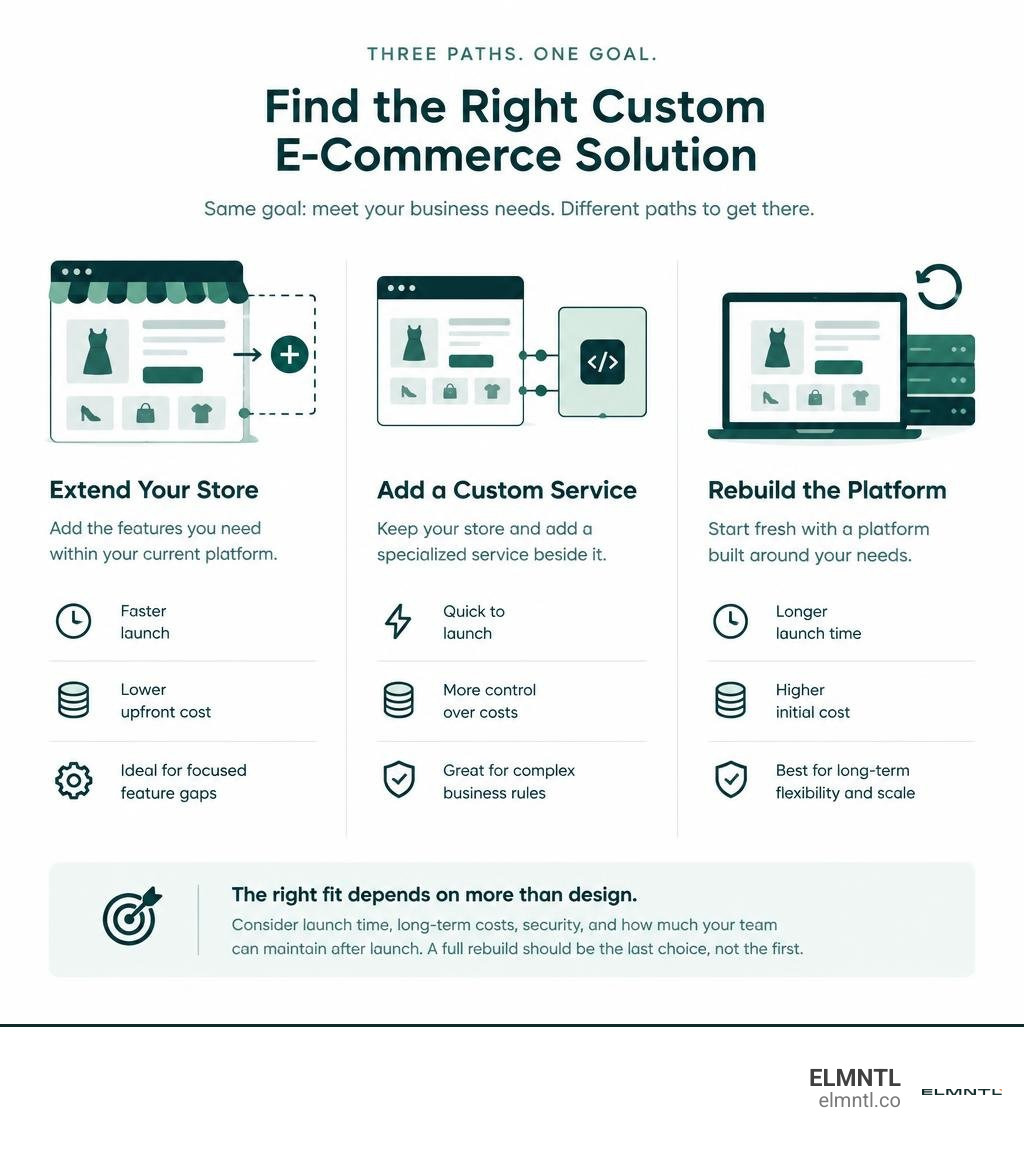
Customized e-commerce solutions are worth considering when a standard store cannot support a business rule your team needs to run. That might mean contract pricing, complex product options, or orders that must sync with an inventory system. Start by naming the rule and measuring the cost of the manual workaround. Then compare three options: extend your current store, add a custom service beside it, or rebuild the platform. A full rebuild should be the last choice, not the first.
The right fit depends on more than design. It also depends on launch time, long-term costs, security, and how much your team can maintain after launch.
Customized e-commerce solutions definitions:
Retail commerce continues to shift rapidly toward digital channels, with online transactions accounting for more than a fifth of all global retail sales in 2025. As this multi-trillion dollar sector expands in 2026, standard off-the-shelf templates and simple plug-and-play storefronts often struggle under operational weight. Research indicates that 42% of users will leave a website entirely due to poor functionality or broken user experiences. When standard storefront builders become operational bottlenecks, evaluating tailor-made architecture becomes an essential strategic priority.
Evaluating Customized E-Commerce Solutions vs. Standard SaaS Platforms
Standard SaaS platforms offer fast time-to-market and low initial entry barriers. Many brands launch basic stores quickly, and enterprise SaaS setups often go live in under 90 days. However, as an organization scales its product catalog, introduces B2B wholesale workflows, or integrates legacy back-office systems, rigid platform parameters begin to restrict operational velocity.
Pre-built platforms rely heavily on sprawling ecosystems of third-party plugins. As businesses add plugins to manage recurring billing, dynamic bundling, or multi-location inventory, software conflicts inevitably emerge. These plugin stacks create fragile dependencies, slow down page speeds, and carry ongoing monthly subscription costs. Standard platforms also frequently levy third-party transaction fees ranging from 0.2% to 2.0% unless you use their preferred native payment gateways. Over time, these transaction surcharges eat directly into gross margins.
| Feature / Metric | Off-the-Shelf SaaS | Headless Framework | Fully Bespoke Custom Platform |
|---|---|---|---|
| Typical Launch Timeline | 30 to 90 days | 3 to 6 months | 6 to 9+ months |
| Upfront Capital Cost | Low to Moderate | Moderate to High | High |
| Transaction Fee Overhead | 0.2% to 2.0% + gateway fees | Gateway fees only | Gateway fees only |
| Workflow Flexibility | Constrained by platform rules | Decoupled frontend freedom | Complete end-to-end control |
| System Integrations | Plugin and webhooks dependent | Robust API-driven connectivity | Direct bidirectional sync |
| Code & Data Ownership | Proprietary vendor lock-in | Decoupled UI / vendor backend | 100% proprietary code ownership |
When evaluating platforms, businesses often assess tools like modern enterprise eCommerce solutions to understand where pre-packaged SaaS capabilities end and where bespoke software engineering must begin.
When Standard Templates Reach Their Technical Ceiling
A platform reaches its technical ceiling when your operational rules can no longer be expressed inside native administrative settings. For example, direct-to-consumer brands scaling wholesale operations often require multi-tiered contract pricing, split shipments from distinct fulfillment hubs, or customer-specific catalog visibility. If your staff must run manual spreadsheets at month-end to reconcile pricing tiers, calculate volume discounts, or re-enter orders into your Enterprise Resource Planning (ERP) database, the template is broken.
Investing in website customization services that drive results enables high-growth merchants to replace clunky workarounds with automated, programmatic rules. Tailored solutions allow custom product configurators, automated quotation requests, and complex attribute filtering that standard template widgets simply cannot support.
Total Cost of Ownership and Scalability Trade-Offs
While customized software requires a larger upfront capital commitment, its long-term Total Cost of Ownership (TCO) often proves more cost-effective for high-volume enterprises. Off-the-shelf platforms feature escalating software tiers, per-seat licensing charges, and compounding monthly application subscriptions. By eliminating third-party platform transaction fees and consolidating disparate software tools into a unified infrastructure, scaling brands can reclaim substantial gross margin.
Reviewing an A-Z guide to customized solutions helps leaders weigh upfront development timelines against long-term operational efficiency, data sovereignty, and reduced recurring fees.
Top Architectural Frameworks for High-Growth Online Stores
Modern digital commerce has shifted away from brittle monoliths toward modular, composable commerce frameworks. Built on MACH principles (Microservices, API-first, Cloud-native, and Headless), these architectures allow businesses to assemble specialized tools rather than remaining trapped inside a single vendor ecosystem.
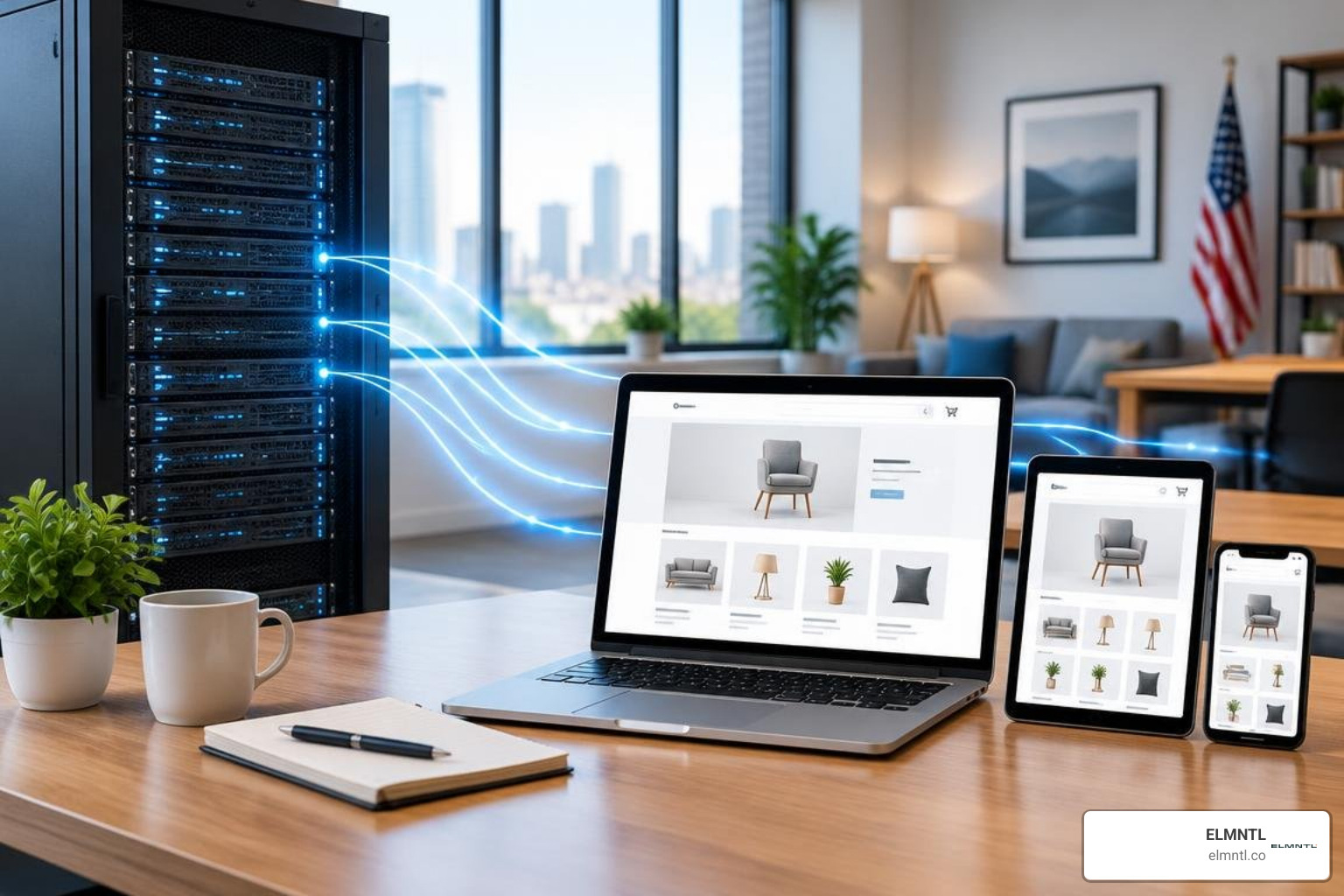
Decoupling front-end user interfaces from back-end transactional engines allows engineering teams to deploy updates to customer touchpoints without risking core database stability. Academic and industry evaluations, such as the OAR@UM research on microservice performance and scalability, show that microservice architectures provide superior fault isolation and horizontal scaling during severe traffic spikes compared to monolithic structures.
Headless Architecture as Customized E-Commerce Solutions
Headless architecture separates the customer-facing presentation layer (built with modern frameworks like Next.js or Nuxt) from back-office commerce logic via high-speed GraphQL or REST APIs. This decoupling allows global brands to deploy lightning-fast localized storefronts across diverse regions, currencies, and languages without duplicating their back-end infrastructure.
A decoupled approach pairs seamlessly with dedicated content engines. Implementing the complete guide to custom CMS development allows editorial and marketing teams to launch rich storytelling layouts, landing pages, and interactive lookbooks independently of core catalog code. For brands expanding into international wholesale channels, integrating modern global eCommerce solutions directly through unified API layers ensures smooth digital line sheets, automated wholesale ordering, and real-time inventory visibility.
Incremental Microservices and Modular Customized E-Commerce Solutions
Transitioning to tailored architecture does not require an immediate, high-risk replatforming project. Rather than replacing an entire operational store on day one, brands can deploy standalone microservices beside their existing platform to handle isolated bottlenecks.
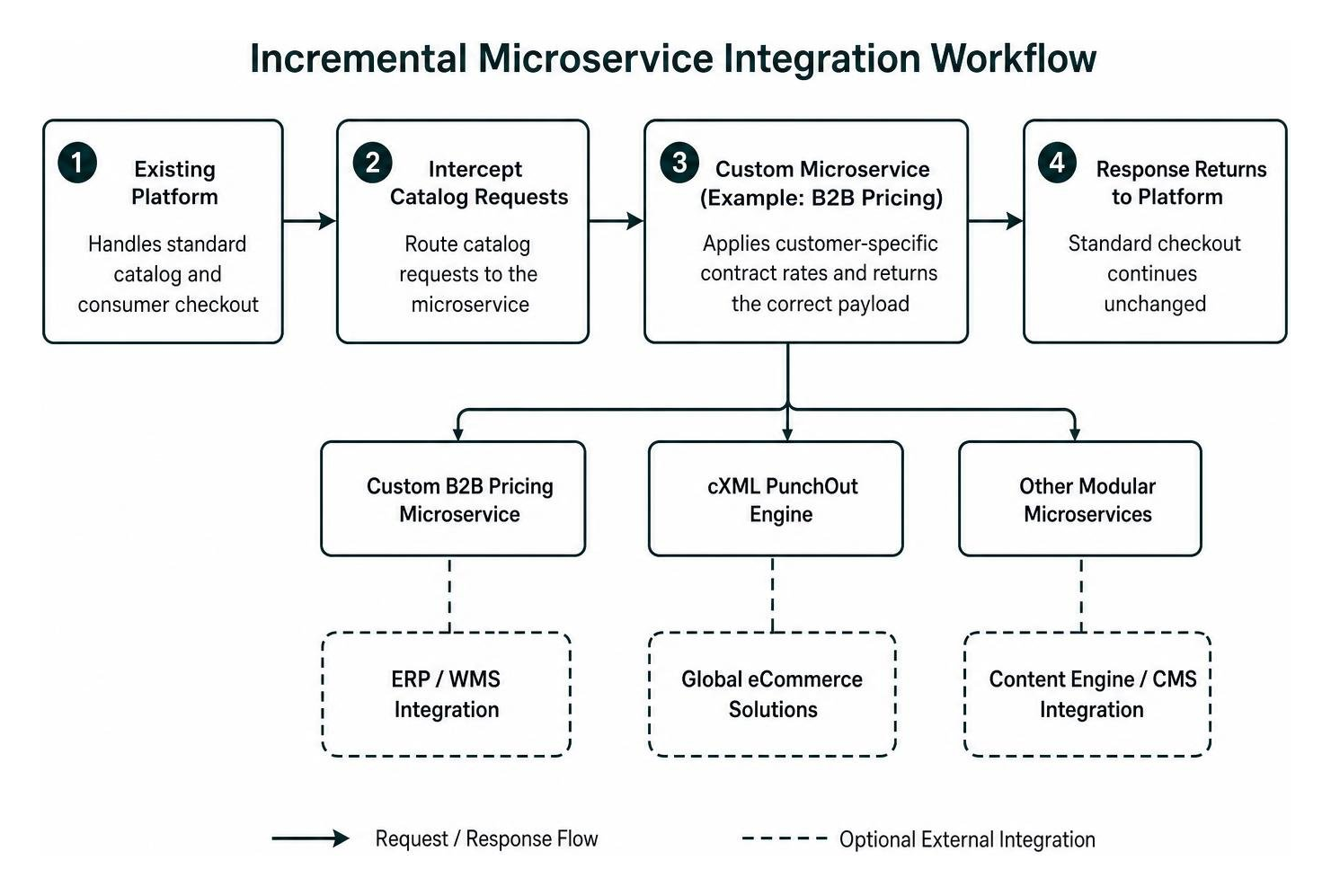
For instance, if your current platform handles consumer checkout well but fails at multi-tiered B2B volume pricing, you can deploy a custom pricing microservice or cXML PunchOut engine next to your platform. This microservice intercepts catalog requests, applies customer-specific contract rates, and returns the correct payload while leaving standard checkout functions untouched. Applying proven tips for optimizing website conversions ensures that custom pricing logic operates with zero perceptible latency during buyer browsing.
Key Functional Pillars to Build When Customizing Your Store
A successful custom commerce implementation bridges customer-facing shopping journeys with complex back-office operations.

Complex Catalog, Tiered Pricing, and B2B Logic
Enterprise B2B and direct-to-consumer catalogs require flexible data models that standard platforms struggle to support. Custom commerce engineering provides:
- Customer-Specific Price Books: Dynamically display negotiated contract pricing, tiered volume discounts, and specialized currency rates upon customer login.
- Granular Role-Based Access Control (RBAC): Enable parent-child corporate buyer accounts with tiered purchasing permissions, spending limits, and internal approval flows.
- Dynamic Product Configurators: Manage millions of stock keeping unit (SKU) combinations, bespoke dimensional calculations, or made-to-order assembly specifications.
- Multi-Vendor Marketplace Infrastructure: Coordinate vendor onboarding portals, automated commission splits, and localized delivery routing.
Collaborating with expert e-commerce design professionals guarantees that complex logic translates into intuitive user journeys that drive customer retention.
Security, PCI DSS Scope, and Checkout Optimization
Handling customer data and digital payments requires strict adherence to international security frameworks. One of the most critical decisions during custom development is managing your Payment Card Industry Data Security Standard (PCI DSS) scope.
Building a completely bespoke checkout where credit card numbers hit your own servers expands your compliance obligation to Self-Assessment Questionnaire D (SAQ D), requiring expensive annual third-party audits and intensive vulnerability scanning. To mitigate this risk, modern customized solutions deploy tokenized, embedded checkout iFrames or hosted elements provided by compliant payment processors. This architecture preserves a frictionless, branded single-page checkout while keeping your infrastructure within SAQ A scope, securing data privacy while reducing compliance overhead.
Pairing secure checkout infrastructure with strategies for maximizing online revenue through digital marketing ensures your store protects sensitive buyer data while maintaining high checkout conversion rates.
Step-by-Step Implementation and Sourcing Roadmap
Building custom commerce architecture requires a disciplined engineering roadmap to prevent scope creep, control costs, and ensure zero downtime.
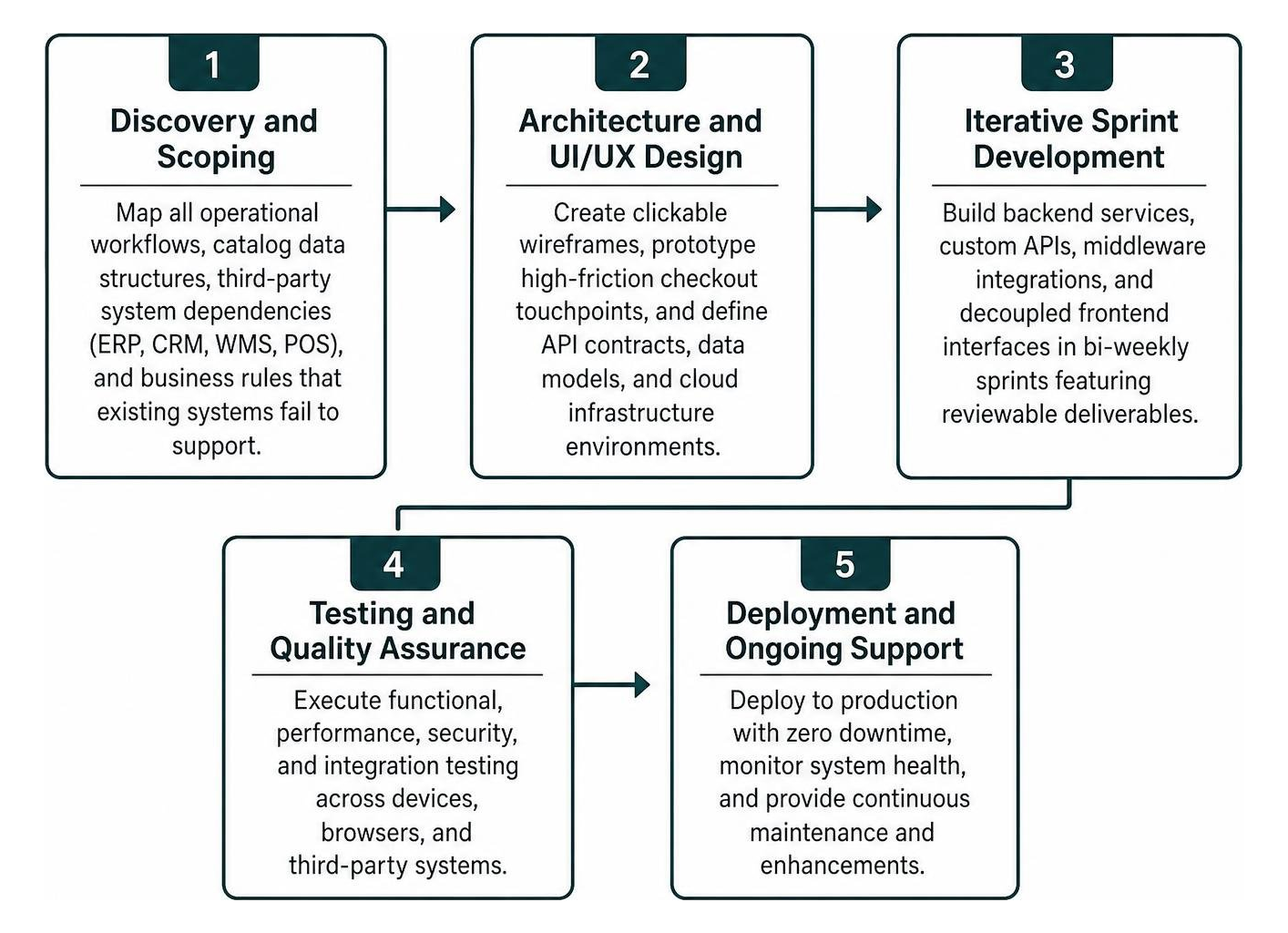
The 5-Phase Custom Development Lifecycle
- Discovery and Scoping: Map all operational workflows, catalog data structures, third-party system dependencies (ERP, CRM, WMS, POS), and business rules that existing systems fail to support.
- Architecture and UI/UX Design: Create clickable wireframes, prototype high-friction checkout touchpoints, and define API contracts, data models, and cloud infrastructure environments.
- Iterative Sprint Development: Build backend services, custom APIs, middleware integrations, and decoupled frontend interfaces in bi-weekly sprints featuring reviewable deliverables.
- Comprehensive Quality Assurance: Conduct end-to-end integration testing, database stress testing, penetration audits, and checkout simulations. Industry benchmarks demonstrate that proactive pre-release testing delivers a 40% reduction in post-launch operational bugs.
- Deployment and Data Migration: Perform zero-downtime database cutovers, catalog attribute mapping, and URL preservation with automated 301 redirects before handing off comprehensive architectural documentation.
Sourcing Talent: In-House Teams vs. Freelancers vs. Dedicated Agencies
Choosing the right engineering partner is critical to long-term success:
- In-House Engineering Teams: Provide dedicated internal focus, but demand substantial payroll overhead, recruiting delays, and potential gaps across niche disciplines like payment compliance or cloud architecture.
- Freelancers: Offer short-term cost savings for isolated plugin fixes, but introduce significant operational risk, inconsistent availability, and lack the bandwidth required for enterprise-scale builds.
- Dedicated Professional Agencies: Deliver full teams of senior solutions architects, UI/UX designers, backend engineers, and QA specialists. Partnering with an agency gives you deep technical expertise while ensuring you maintain full source code ownership without long-term vendor lock-in.
Backing up tailored development by boosting conversion rates with SEO strategies ensures that your newly deployed architecture gains immediate search visibility and organic customer acquisition.
Frequently Asked Questions About Customized E-Commerce Solutions
How do we know when our business has outgrown an off-the-shelf platform?
You have outgrown your platform when manual workarounds, such as external spreadsheets, manual order re-entry, or complex inventory reconciliations, become necessary to run daily sales. Frequent third-party plugin crashes, rigid checkout limitations, and the inability to establish bidirectional API integrations with your ERP or warehouse management software are clear signs that you need a customized solution.
Does custom e-commerce development require building checkout from scratch?
No. Building a custom payment checkout from scratch significantly increases your PCI DSS compliance scope and exposes your business to unnecessary operational vulnerabilities. Best practices involve building custom business logic, catalogs, and quoting portals on the frontend and middleware layers while embedding tokenized checkout components from trusted processors. This approach delivers a fully branded customer experience while keeping your servers strictly in the SAQ A compliance tier.
What ongoing maintenance costs should we budget after launch?
Post-launch operational budgets typically include cloud hosting infrastructure (ranging from $100 to over $1,000 monthly depending on transaction volume), API uptime monitoring, ongoing database backups, continuous security patching, and periodic SEO performance audits. Allocating 15% to 20% of your initial build cost annually for maintenance ensures your store remains secure, performant, and aligned with evolving browser and payment standards.
Conclusion: Taking Full Control of Your E-Commerce Growth
Standard templates serve an important purpose for early-stage ventures testing product-market fit. However, when your operational rules, B2B workflows, and multi-channel fulfillment models outgrow rigid SaaS boundaries, customized architecture becomes your strongest competitive advantage.
By taking an incremental, API-first approach, high-growth brands gain complete code ownership, eliminate expensive transaction fee surcharges, and deliver frictionless buying experiences that convert casual visitors into loyal customers. At ELMNTL, we leverage over 15 years of industry experience and award-winning strategic expertise to engineer high-performance digital platforms tailored around your unique operations.
Ready to eliminate software bottlenecks and scale your digital store? Explore our tailored web design and growth services to build an e-commerce platform that grows alongside your ambitions.