

What Is Service Experience Design?
Service experience design connects what customers go through with the people, tools, and processes that make it happen. It looks beyond a single website, call, or visit to the full journey, including the work customers never see. The goal is a service that feels clear and consistent to customers and is practical for employees to deliver.
That distinction matters when a polished touchpoint hides a broken handoff. Improving the interaction may help, but lasting change often means fixing the process behind it.
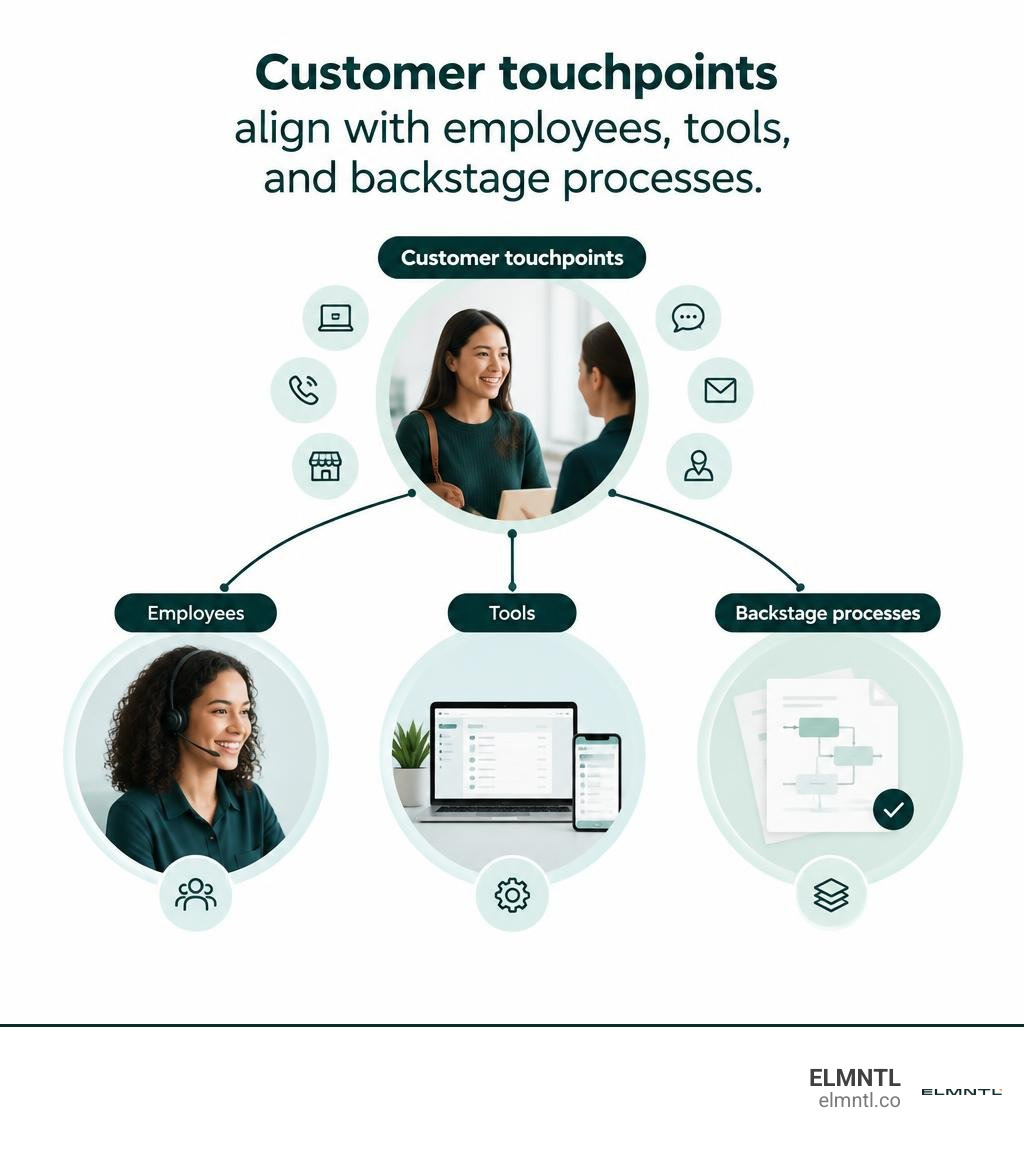
Terms related to service experience design:
Services now account for roughly 80% of the modern economy. Whether you run a healthcare network, a digital SaaS platform, or a retail ecosystem, your business thrives on intangible exchanges. The concept of service design originated in 1982 when Lynn Shostack argued that companies must systematically engineer their behind-the-scenes operations rather than leaving service delivery to chance. The practice was formalized as an academic discipline at the Köln International School of Design in 1991, evolving from a focus on operations into a holistic organizational strategy.
When businesses fail to align internal mechanisms with outward promises, customer trust breaks down. An app might look flawless, but if backstage communication fails, the entire relationship suffers.
The Strategic Value of Service Experience Design
Every service interaction is part of a larger ecosystem. Service design addresses the entire business model, aligning operational capacity with market positioning so companies deliver sustainable value.
When organizations view their offerings through the multilevel service design framework, they link overall business strategy to service architectures and concrete customer encounters. This structure prevents disjointed operations and ensures that marketing campaigns do not promise outcomes internal teams cannot support. By aligning your marketing and customer experience, businesses eliminate friction before it reaches the customer.
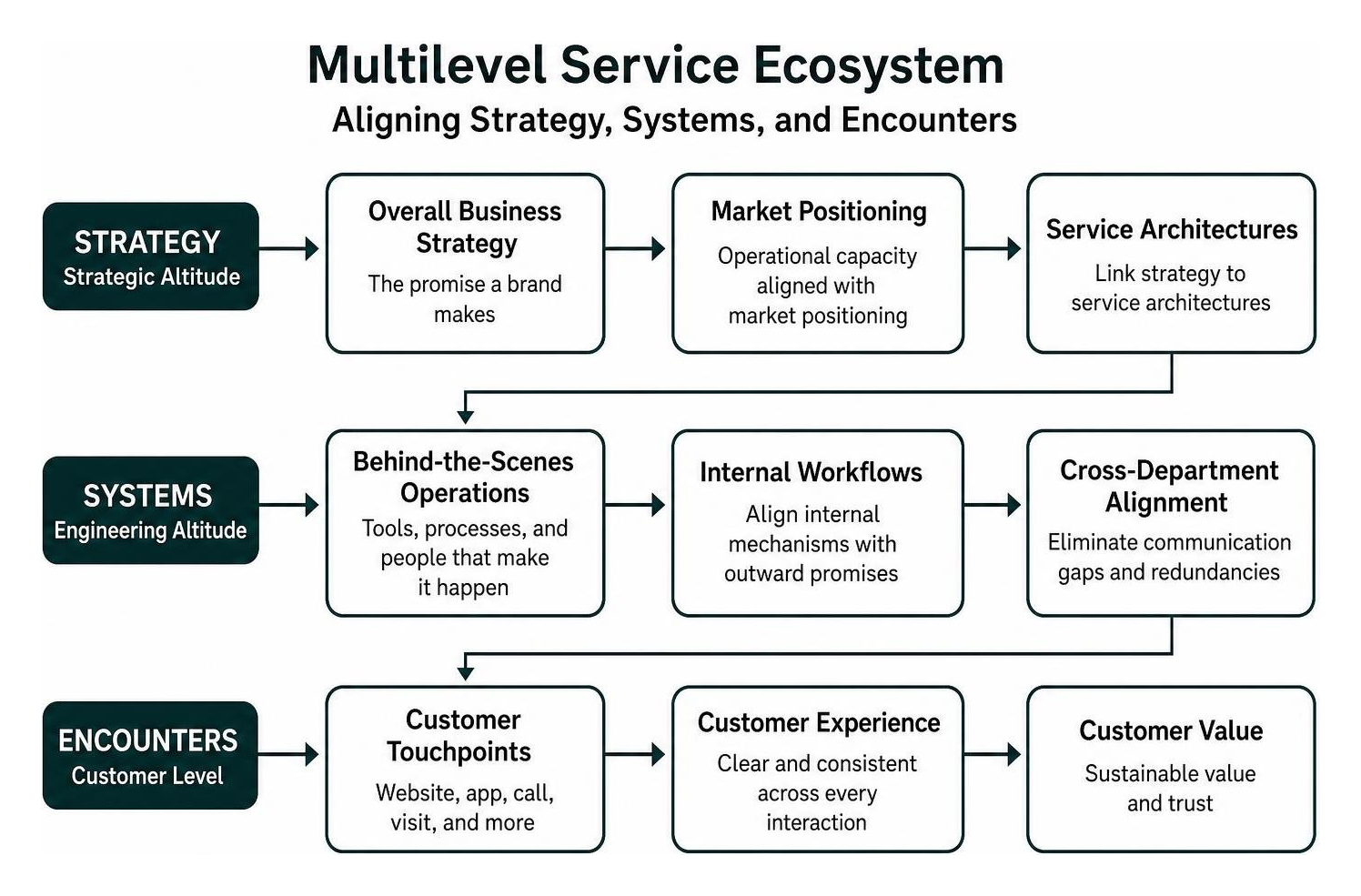
Connecting frontstage interactions with internal workflows reduces organizational redundancies and eliminates communication gaps across departments.
Service Design vs. Experience Design: The Altitude Difference
While customer experience (CX) design and service design are closely linked, they operate at different operational altitudes. CX design operates at a strategic altitude, establishing the emotional goals and brand perception across every touchpoint. Service design operates at an engineering altitude, constructing the workflows, technical integrations, and operational protocols needed to deliver that experience reliably.
User experience (UX) design focuses specifically on the interaction level, ensuring interfaces and digital touchpoints are intuitive. Understanding how these disciplines work together helps teams execute the industry standard UX design process steps within a cohesive operational framework.
| Dimension | User Experience (UX) Design | Customer Experience (CX) Design | Service Design (SD) |
|---|---|---|---|
| Primary Scope | Specific digital product or interface | Total brand perception and relationship | End-to-end service ecosystem |
| Operating Focus | Usability, interaction flow, accessibility | Customer sentiment, loyalty, brand promise | Workflows, employee tools, infrastructure |
| Primary Artifacts | Wireframes, prototypes, user flows | Journey maps, voice-of-customer surveys | Service blueprints, ecosystem maps |
| Key Metrics | Task completion, error rate, bounce rate | Net Promoter Score (NPS), CSAT, retention | Operational efficiency, service latency, CES |
| Altitude | Tactical / Interface | Strategic / Brand perception | Operational / Systemic engineering |
Integrating Behavioral Economics into Service Experience Design
Memorable service delivery relies on human psychology. Behavioral economics provides a scientific foundation for crafting service experiences that leave positive, lasting impressions.
A cornerstone concept is the peak-end rule, established by psychologist Daniel Kahneman. Research shows that people judge an experience primarily by its most intense point (the peak) and its final moment (the end), rather than the mathematical average of every second spent. Effective customer experience design deliberately engineers positive peaks and supportive endings.
Behavioral economics also guides service designers in choice architecture and sludge removal. Sludge refers to unnecessary friction, confusing paperwork, or cognitive hurdles that drain customer energy. Reducing friction makes service interactions smoother, while intentional choice architecture helps users make decisions without feeling overwhelmed. Furthermore, scientific research on service staging illustrates that balancing customer empowerment through intuitive self-service with visible backstage competence builds long-term brand trust. (Beltagui et al., 2016)
The Anatomy of Service Delivery: Frontstage, Backstage, and Core Components
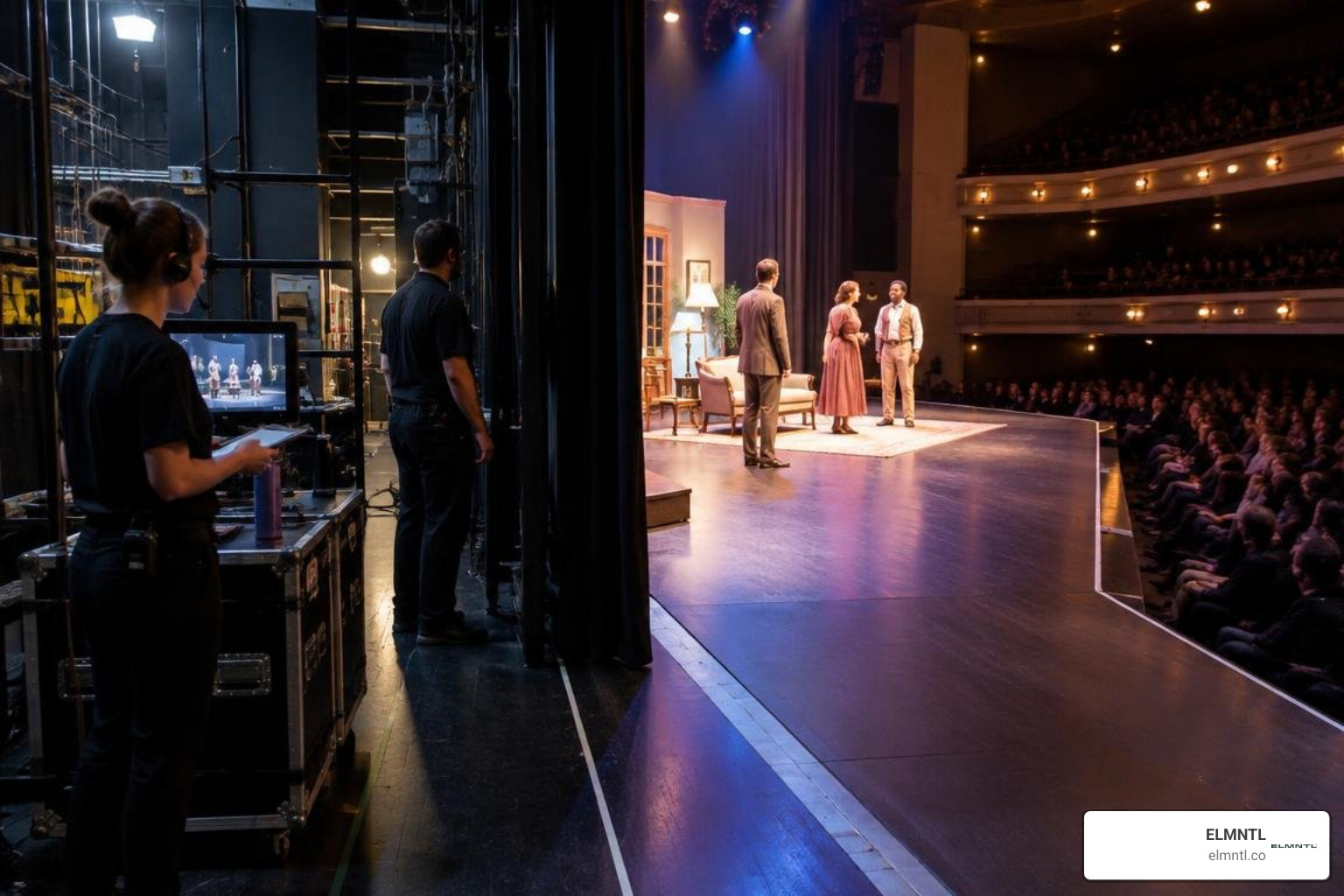
Service delivery functions like a theater production. The audience experiences the performance on the frontstage, but the production succeeds only because of the lighting, rigging, and stage management operating behind the scenes.
Service design organizes every offering around three primary components:
- People: Anyone who creates, delivers, or interacts with the service. This includes frontline staff, backstage support personnel, partners, and the customers themselves.
- Props: The physical and digital artifacts used during delivery. Props encompass websites, mobile applications, billing statements, physical facilities, signage, and automated notification systems.
- Processes: The workflows, rules, and sequences that orchestrate interactions between people and props.
The line of visibility separates the frontstage (everything visible to the customer) from the backstage (internal systems, server calls, inventory databases, and administrative handoffs). When mapping customer journey touchpoints, organizations must trace each frontstage interaction back to its corresponding backstage dependencies.
The Five Foundational Principles of Service Design
According to established service design principles and standards, modern service architecture is guided by five foundational tenets:
- User-Centered: Services must be designed around real user needs, behaviors, and limitations, gathered through qualitative research rather than internal assumptions.
- Co-Creative: Design is not an isolated exercise. All stakeholders, including frontline employees, support agents, executives, and end-users, participate in crafting the solution.
- Sequencing: Services unfold over time. The journey must be structured as a rhythmic, logical timeline of pre-service, during-service, and post-service moments.
- Evidencing: Intangible services become clearer when supported by physical or digital artifacts. Confirmation emails, progress trackers, and status dashboards provide tangible proof of service delivery.
- Holistic: The entire service ecosystem must be considered, including organizational culture, partner networks, regulatory constraints, and technical infrastructure.
These principles directly benefit employees. When internal systems are designed to eliminate redundant data entry and confusing handoffs, employee satisfaction increases, which directly improves customer interactions.
Overcoming Backstage Blind Spots and Operational Silos
When departments operate in isolation, backstage gaps appear. These disconnects create shadow systems, where employees invent manual workarounds using disconnected spreadsheets or unofficial chat channels just to complete routine tasks.
These workarounds introduce operational latency, high error rates, and support bottlenecks. Customers feel these failures when they are transferred between departments and forced to repeat their account history. Designing customer journeys that feel like second nature requires identifying backstage handoffs and automating data transfers between functional teams.
Implementing Service Design: Mapping, Prototyping, and Execution

Transforming service operations requires structured tools and iterative testing before rolling out major operational changes.
While a customer journey map captures user emotions, expectations, and frontstage touchpoints, a service blueprint extends that map downward. It documents frontstage employee actions, backstage employee actions, automated support processes, and physical evidence for every single step. Teams can create design thinking customer journey maps to uncover friction points, and then translate those findings into a comprehensive operational blueprint.
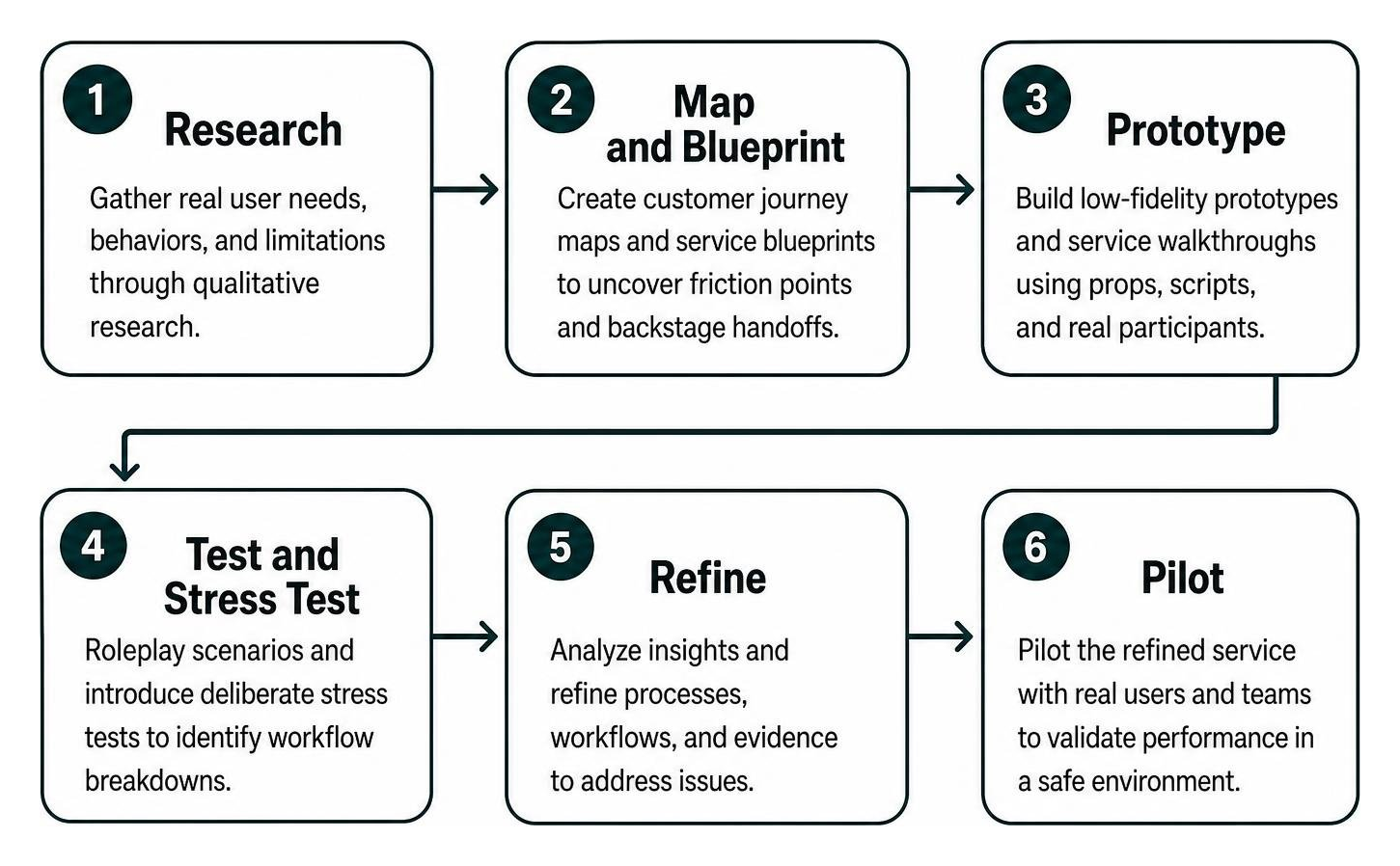
Before rolling out new processes across an entire organization, teams should prototype the service using low-fidelity simulations. Applying established service walkthrough methodologies allows teams to roleplay service scenarios with physical props, scripts, and real participants. Introducing deliberate stress tests, such as simulated technical delays or edge-case requests, reveals where internal workflows break down in a safe testing environment.
Core deliverables for a complete service design initiative include:
- Ecosystem Map: A high-level visual representation of all actors, platforms, and relationships within the service environment.
- Customer Personas and Scenarios: Research-backed behavioral archetypes that capture user goals, motivations, and environmental contexts.
- Customer Journey Maps: Detailed visual timelines illustrating frontstage interactions alongside customer thoughts and emotional states.
- Service Blueprint: The operational matrix linking frontstage customer steps with backstage employee actions, digital systems, and support processes.
- Service Prototypes and Pilots: Low-fidelity walkthroughs and small-scale live deployments designed to evaluate real-world performance before full launch.
Key Challenges in Modern Service Experience Design
Organizations frequently face hurdles when modernizing service delivery. A common mistake is relying on heroic employees to compensate for flawed systems. When exceptional service depends entirely on individual staff members working overtime to overcome broken tools, the organization risks operational burnout and inconsistent performance.
Another common pitfall is treating customer experience and service design as isolated efforts. When marketing teams design customer touchpoints without consulting operational teams, service delivery falls apart. Successful companies leverage customer journey mapping to build long-term loyalty by aligning customer expectations with backstage operational capabilities.
Frequently Asked Questions About Service Experience Design
What is the primary difference between UX and service design?
UX design focuses on the usability, layout, and interaction quality of specific digital products, such as mobile apps and websites. Service design addresses the entire multi-channel journey, orchestrating the backstage systems, employee roles, physical environments, and operational policies that support those digital interactions. You can explore how digital interfaces fit into broader systems by demystifying the UX design process.
Why are backstage processes critical if customers never see them?
Backstage processes dictate the speed, accuracy, and reliability of frontstage service delivery. If internal databases do not synchronize or departments fail to communicate during account handoffs, customers experience delays, conflicting information, and technical errors. Operational stability behind the scenes is essential for creating a smooth frontstage experience.
How do organizations measure the success of service design initiatives?
Success is evaluated using a combination of customer sentiment metrics and operational efficiency indicators:
- Customer Effort Score (CES): Evaluates how easy it was for a user to accomplish their specific goal.
- Customer Satisfaction (CSAT) and Net Promoter Score (NPS): Gauges emotional satisfaction and long-term brand loyalty.
- First-Contact Resolution (FCR): Measures the percentage of customer requests resolved without requiring follow-up interactions.
- Operational Latency and Error Rates: Tracks processing speed, system downtime, and error reductions across internal workflows.
Conclusion
Service experience design provides the blueprint for sustainable business growth. By connecting frontstage brand touchpoints with backstage employee workflows, organizations eliminate operational silos, reduce wasted effort, and deliver consistently high-quality experiences.
At ELMNTL, we help organizations translate strategic vision into functional, high-performing digital ecosystems. Our teams combine brand strategy, web design, and integrated digital execution to ensure your operational capabilities match your market positioning. To build coherent, end-to-end service experiences that support your business goals, explore our digital and brand services and see how we align operational design with measurable growth.
References
Ahmad Beltagui, Marina Candi, Johann C.K.H. Riedel. “Setting the stage for service experience: design strategies for functional services.” Journal of Service Management, 2016. DOI 10.1108/josm-08-2015-0234.